28 April 2026

10 Best Etsy Alternatives for Sellers in 2026
If you’ve been selling on Etsy for a while, you probably know how it goes. Fees slowly add up. Algorithm changes can push your listings out of sight. And sometimes, a single policy update can disrupt everything overnight. It’s frustrating—but you’re definitely not the only one dealing with it.
Many sellers are in the same boat. From handmade creators to digital product sellers and independent artists, more and more people are searching for a better place to run their shops.
The good news is, you have options. There are more Etsy alternatives now than ever before. Some offer lower fees. Others give you more control over your brand. And a few are built for specific niches, which can help you stand out.
In this guide, we’ll go through 10 of the best Etsy alternatives for sellers. You’ll see what each platform offers, along with its pros, cons, and pricing.
By the end, you’ll have a much clearer idea of where your shop fits best.
Why Sellers Are Looking for Etsy Alternatives
Etsy isn’t going anywhere, but its relationship with sellers has gotten complicated.
Here’s what’s driving people to look for an Etsy alternative:
- Rising Fees: Etsy’s transaction fee is currently 6.5%, and when you add in payment processing, listing fees, and optional advertising costs, many sellers find themselves handing over 15–20% of every sale.
- Offsite Ads: Mandatory for top sellers. If you earn over $10,000 a year on Etsy, you’re automatically enrolled in Offsite Ads and charged an extra 12% on any sale that comes through an ad click. You can’t opt out.
- Lack of Control: You cannot customize your store design or branding. Your shop looks exactly like everyone else’s.
- High Competition: The marketplace is flooded with mass-market products that aren’t actually handmade. This makes it hard for genuine creators to stand out.
- Algorithm Dependency: Etsy controls your visibility. A tweak to their search algorithm can cut your traffic in half overnight, and there’s nothing you can do about it.
10 Best Etsy Alternatives for Sellers in 2026
Below are the best alternatives to selling on Etsy:
1. Shopify

Shopify is one of the best hosted eCommerce platforms. It’s also a strong choice if you’re looking for an alternative to Etsy.
With Shopify, you can build your own online store and stay in full control. You decide how your brand looks, how you price your products, and how you connect with customers. You can even manage your Etsy listings right from your Shopify dashboard. That makes it easy to sell on both platforms simultaneously.
One of the biggest perks of Shopify is how simple it is to use. It has a plug-and-play setup, so you don’t have to piece things together yourself. Everything you need is built into one system.
You can get hosting, a domain name, payment options, and store design tools without leaving the platform. It also includes marketing features, order tracking, and more. You don’t need to rely on multiple tools to get started.
Shopify also provides a clean, helpful seller dashboard. It shows your recent sales and lets you compare them with past performance. This makes it easier to track growth and spot trends.
There’s also a built-in discount tool. You can create offers based on products, links, or seasonal campaigns. No coding needed. You can set percentage discounts, fixed amounts, or “buy X, get Y” deals in just a few clicks.
On top of that, you can track key metrics, such as average order value. You can see how each sales channel is doing and where your traffic is coming from. These insights help you make smarter decisions.
If you’re moving from Etsy, Shopify makes the process smooth. Its migration tools help you migrate your store with minimal hassle. You can then sell online, in person, or even through social media.
Overall, Shopify is an all-in-one platform that’s easy to use. It gives you the tools you need to grow and manage your online store with confidence.
Pros of Shopify:
- Super beginner-friendly with no technical setup required
- Full design control with 800+ Shopify themes
- Unlimited products with no listing fees
- You own 100% of your customer data
- Massive app ecosystem and integrations
- No transaction fees with Shopify Payments
- Multi-platform selling across social and physical stores
Cons of Shopify:
- Monthly subscription fee regardless of sales
- No built-in traffic. Marketing is required
Pricing:
Shopify offers a 3-day free trial + 3 months for $1. The Basic plan starts at $39/month.
2. WooCommerce

WooCommerce is a great option if you’re ready to move on from Etsy and take your business to the next level.
It runs on WordPress, which makes it a powerful eCommerce plugin. If you want full control over your store, this setup is hard to beat. With WordPress, you can tweak every part of your site and add extra features using plugins.
Getting started with WooCommerce is pretty simple. The setup is beginner-friendly, and managing your store feels intuitive. Moving your shop from Etsy is also smooth, thanks to an easy-to-use product editor.
One big advantage of WooCommerce is its flexibility. You get access to a wide range of tools and resources to shape your store around your brand. Etsy, on the other hand, can make it tough to stand out.
When your shop looks like everyone else’s, your products can feel less special. That’s not an issue with WooCommerce. You can design a store that truly reflects your style.
WordPress gives you built-in tools like the block editor and full site editor to create your site. If you prefer something even easier, you can use a beginner-friendly page builder to design your store your way.
You also get more control over how your business runs. Choose your own payment gateways, create popups to keep visitors engaged, improve your SEO, and add features like one-click upsells.
Another plus is that everything stays in one place. You don’t need to switch between different platforms. You can manage your entire store right from your WordPress dashboard.
Overall, WooCommerce is one of the best Etsy alternatives if you want to build a Etsy like store on WordPress. It works well for selling both physical and digital products from your own site.
Check out our list of the best WooCommerce plugins for your store.
Pros of WooCommerce:
- Free and open-source
- Thousands of WordPress themes and plugins to create a unique, highly specialized store
- Compatible with various WooCommerce payment gateways
- No platform lock-in – you own your data, your code, and your hosting
- Lower transaction fees compared to Etsy (around 2.9% vs 6.5%)
- Built-in SEO tools to attract organic traffic
- Can handle unlimited products and traffic growth
Cons of WooCommerce:
- You have to set up a whole website with WordPress
- Website hosting and domain costs
- You’re responsible for security and backups
Pricing:
WooCommerce itself is free. But you will need a WooCommerce hosting and a domain to get started. Additional costs may include premium themes, plugins, and payment gateway fees.
3. eBay
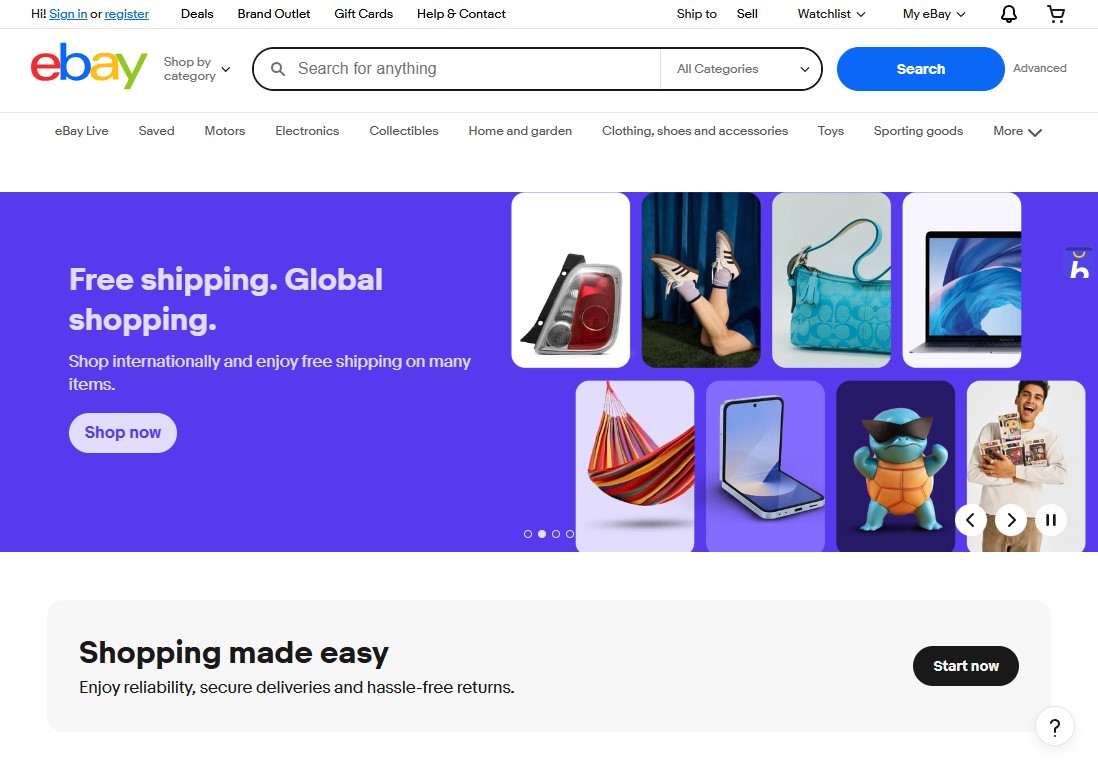
If you’re thinking about selling your products through auctions, eBay can be a solid alternative to Etsy. You still get the perks of a full eCommerce marketplace, but with the added chance to boost your profits.
It’s especially useful if you deal in rare or collectible items. That’s what many buyers go to eBay for, so you’re more likely to find the right audience there.
You won’t have the same level of control over your storefront as you would with platforms like WooCommerce or Shopify. But in return, you get access to a massive built-in audience. eBay has over 135 million active buyers and reaches customers worldwide. In fact, its global presence is second only to Amazon.
One of eBay’s biggest advantages is its auction feature. It works really well for one-of-a-kind or limited items. When supply is low, demand tends to go up.
Auctions also help you get the best possible price. Buyers compete, and the highest bidder wins. Plus, the countdown timer adds urgency, which can prompt people to act more quickly.
Another benefit is the protection eBay offers. Both buyers and sellers are covered, which helps reduce the risk of scams. If something goes wrong, eBay steps in to help resolve the issue. This also makes buyers feel more confident when shopping on the platform.
Pros of eBay:
- Access to 135 million active buyers globally
- Up to 250 free listings per month
- Use auction-style or fixed-price (Buy It Now) formats
- Robust shipping tools and seller protection policies
- Great for unique, high-value art pieces
Cons of eBay:
- Competes with non-handmade product sellers
- Fees can get complex for high-volume sellers
- Higher fees, usually 13.25% of the total sale
Pricing:
eBay charges 10-15% of the final value.
4. Big Cartel

Big Cartel is a simple, easy-to-use eCommerce platform made for small creators, artists, and side hustlers. It’s a great option if you want to sell online without dealing with high costs or complicated setup. Many people even see it as a free alternative to Etsy.
One of the best things about Big Cartel is how easy it is to use. You don’t need any technical skills or website experience to get started. Everything feels straightforward and beginner-friendly.
You also get access to a range of free templates. So, you don’t have to build your store from scratch. These ready-made designs work well for a range of niches, including artists, photographers, bloggers, and other creatives.
Another standout feature is the live classes. Big Cartel offers these to help you learn the basics. You won’t feel stuck or confused while setting things up.
In these sessions, an instructor guides you step by step. You’ll learn how to add products, create discounts, and even handle packaging. It makes the whole process much easier to follow.
Pros of Big Cartel:
- Free forever plan for up to five products
- No transaction fees, only payment processing costs
- Beautiful, designer-focused templates
- Easily import products from Etsy, Squarespace, & Shopify
- Affordable monthly subscriptions plans
- Built-in inventory tracking and order management
- Great for small businesses or artists
Cons of Big Cartel:
- No built-in marketplace traffic compared to Etsy
- Limited customization and design options
- Lacks advanced SEO or marketing tools
Pricing:
Free plan for up to 5 products. The paid plan starts at $15/month, with support for a custom domain and 50 physical products.
5. Amazon Handmade
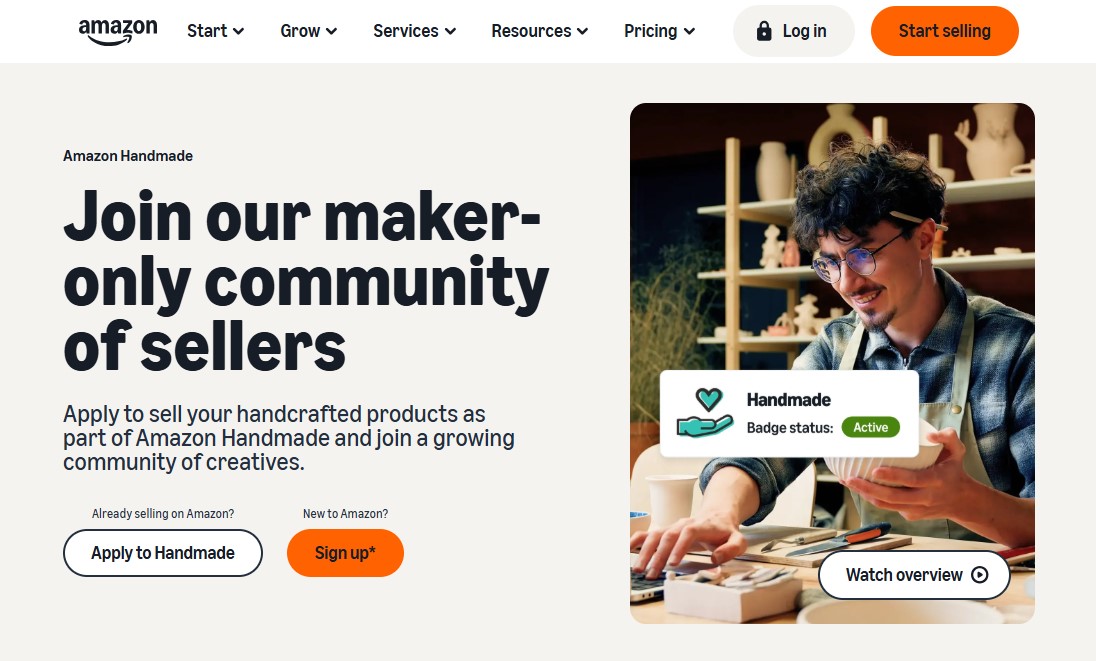
Amazon Handmade is often seen as Etsy’s biggest competitor. It’s a solid option if you want access to a large audience, lower fees, or help with order fulfillment.
One feature that really stands out is its fulfillment program. If shipping is slowing you down, this can make a big difference. It takes a lot of the pressure off and helps you scale more easily.
Amazon Handmade is a special section within Amazon. It’s designed just for artisans. You can sell handmade and personalized products here, not mass-produced items.
One major advantage is the reach. You’re tapping into one of the largest online marketplaces in the world, with over 2.7 billion visits each month. That kind of traffic can open the door to a global audience.
Lower fees are another big plus. There are no listing fees, which means you keep more of what you earn. In fact, about 33% of sellers report profit margins above 20%.
You can also use Fulfillment by Amazon (FBA). This means you send your products in bulk to Amazon’s warehouses. After that, they handle packing, shipping, and labeling for you. On top of that, Prime members get fast, free 2-day shipping. It’s a great way to deliver a smooth, reliable customer experience.
Pros of Amazon Handmade:
- Built-in access to millions of Amazon users
- No listing fees. Only referral fee when your item sells
- Benefit from Amazon’s fulfillment services and marketing tools
- Built-in customer trust from Amazon’s reputation
- Powerful search and recommendation algorithms drive traffic
- Amazon handles disputes to maintain buyer confidence
- No monthly subscription fees for individual sellers
Cons of Amazon Handmade:
- Higher transaction fees compared to Etsy (around 15% vs 6.5%)
- Strict application process – not all sellers get approved
- High competition from other handmade sellers
Pricing:
You need a professional selling account, which is $39.99 per month. However, once you’re approved for Amazon Handmade, your Pro selling fee is waived after your first month. Amazon Handmade 15% referral fee per transaction.
6. Easy Digital Downloads (EDD)
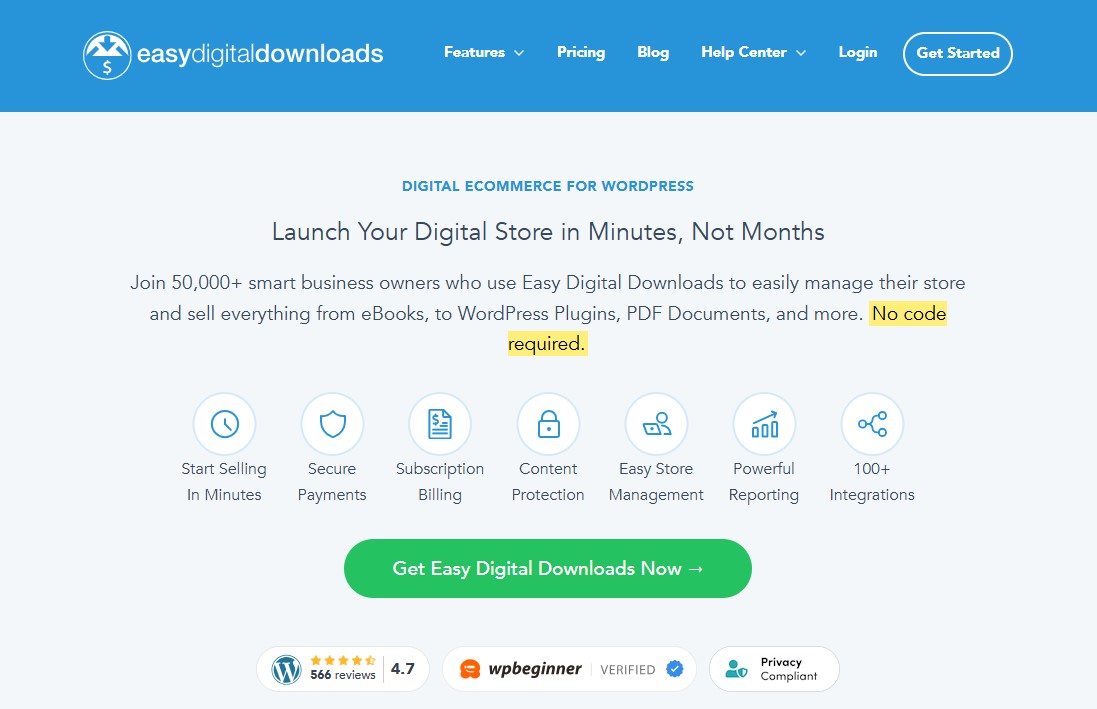
If you’re searching for the best Etsy alternative for selling digital products—and you like the idea of running your own store—Easy Digital Downloads (EDD) is a great pick.
It’s a WordPress plugin built specifically for digital sales. Many eCommerce tools focus on physical products, but EDD is designed for digital creators. That makes a big difference.
You can sell just about anything digital. Think eBooks, software, printables, or online courses. It gives you everything you need to create a smooth buying experience. And the best part? You can build up your store on WordPress in just a few minutes.
One thing people really like about EDD is the control it offers. You manage the entire checkout process. You can let customers create accounts for faster purchases. You can also add flexible payment options, like subscriptions or recurring billing. Want to run a promo? You can easily offer discount codes, too.
EDD also comes with a wide range of extensions. For example, you can connect it to your email marketing tool. That way, you can send updates, special offers, and reminders to your customers without extra hassle.
Pros of EDD:
- Optimized specifically for selling downloads and software licenses
- No listing fees or percentage-based transaction fees
- Complete ownership of customer data and relationships
- 100+ extensions for extensions, payment gateways (Stripe, PayPal), and services
- Detailed sales reporting and customer purchase history
- Flexible pricing options, including subscriptions and bundles
Cons of EDD:
- No built-in traffic as a site like Etsy
- Requires managing your own WordPress site, hosting, and security
Pricing:
A lite version of EDD is available for free on WordPress.org. The Pro version starts at $99.50/year for a single site license.
Aside from the EDD plugin, you only need a WordPress hosting plan and a domain to create an online store.
7. Redbubble

If you’re mainly selling print-on-demand products, Redbubble can be a solid alternative to Etsy. Like Amazon Handmade, it handles fulfillment for you, so you don’t have to worry about packing or shipping orders.
Print-on-demand products are items with your designs printed on them. Think t-shirts, mugs, socks, hats, and similar products. While these items are produced at scale, they still appeal to specific niches and audiences.
If your Etsy shop focuses on this type of product, Redbubble is definitely worth considering. The platform offers a wide range of options, with more than 70 product types. This includes wall art, clothing, gifts, and more.
It also has a strong audience. As of March 2026, Redbubble saw around 20 million visits, indicating steady interest and activity on the platform.
Getting started is simple. You upload your original designs, choose the products you want them on, and list them for sale. If you’re not into heavy promotion or paid ads, you can focus on optimizing your listings and let the platform do much of the work.
Pros of Redbubble:
- No upfront listing cost
- Production and support are handled for you
- Simple platform for uploading and managing designs
- Offers a vast range of products for artists to print on
- Easily create and sell products with no overhead
- Set your own profit margin
Cons of Redbubble:
- Lower earnings per sale
- Fewer customization options compared to some other platforms
Pricing:
Redbubble is free to join and set up a shop. However, Redbubble charges artist fees for certain accounts based on monthly sales.
8. Storenvy
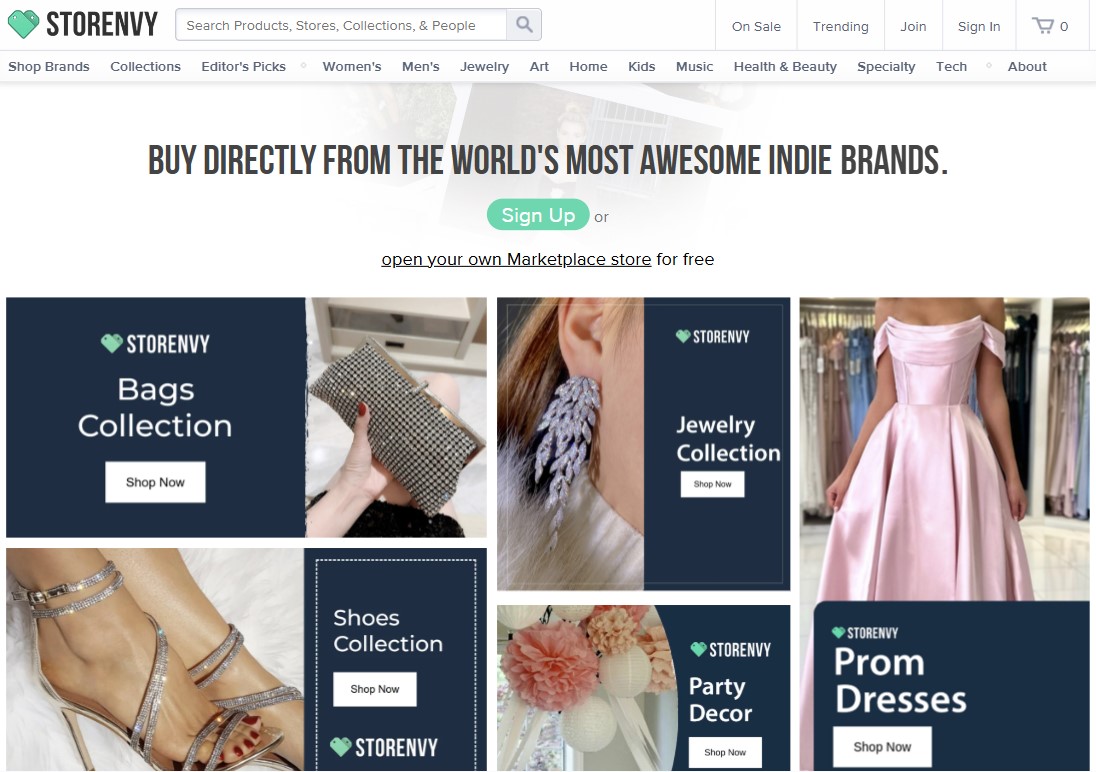
Looking for a free Etsy alternative to set up an online store? You might want to check out Storenvy.
It’s a hybrid platform, which means you get the best of both worlds. You can build your own fully customizable store to showcase your products. At the same time, you can list those products in a shared marketplace filled with shoppers who love indie, handmade, and unique items.
Like Etsy, you can sell trending products and tap into a niche audience. But here’s the difference—you have more control. You can customize your branding, use your own URL, and design your store layout the way you like.
That makes it one of the best Etsy alternatives for sellers who want starter flexibility and low risk.
Pros of Storenvy:
- Free to start with no listing fees
- Custom storefront to build a shop that reflects your style
- Social media integrations to Instagram, Facebook, and Pinterest
- Discount codes and promotional tools
- Order fulfillment, inventory management, and more apps and integrations
- Less saturation and competition than other marketplaces
Cons of Storenvy:
- High commission fees (15%)
- Marketplace is much smaller than Etsy’s
- Limited customer support
Pricing:
Free plan available for listing up to 20 products. The Pro plan starts at $9.99/month for 100 product listings. A 15% commission fee applies to sales made through the Storenvy Marketplace.
9. Squarespace
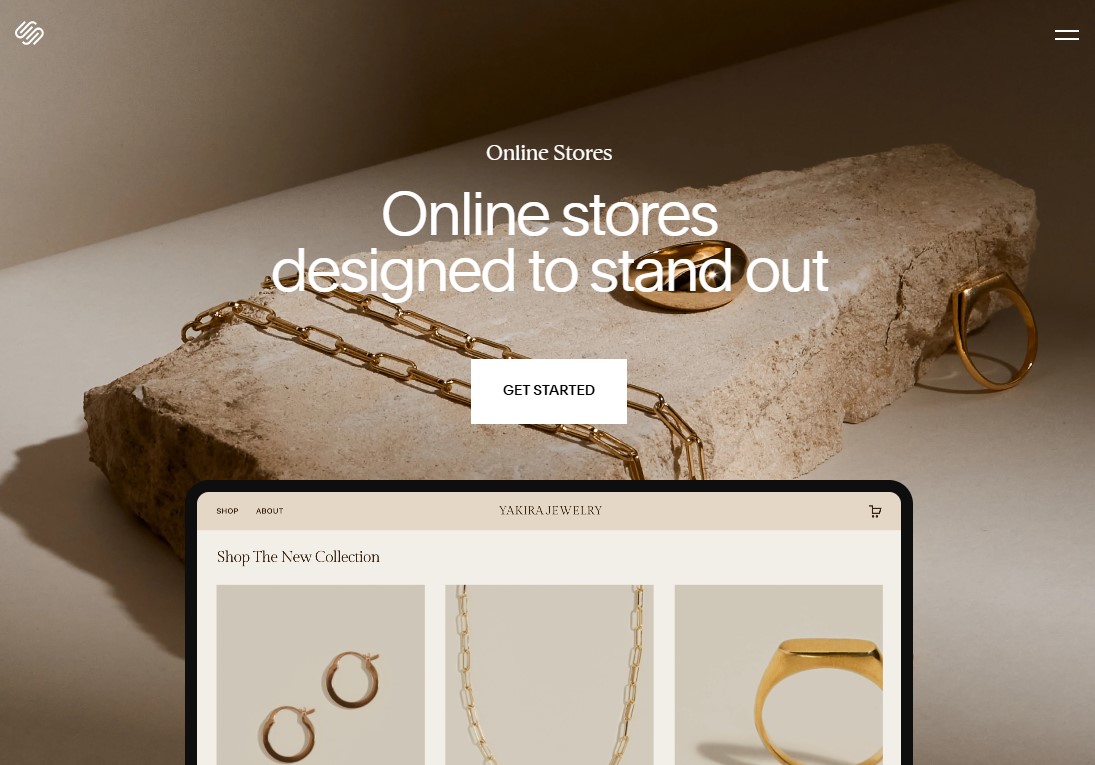
If you’re looking for an alternative to Etsy, Squarespace is worth a look. It’s a website builder known for clean, modern templates and an all-in-one setup.
With Squarespace, you can create a beautiful online store that brings everything together. Your shop, content, and brand all live in one place. This makes it a great option for creatives who care about design. It also works well if you want your store to double as a portfolio.
One big difference from Etsy is the level of control. Squarespace lets you decide exactly how your brand looks and feels. Whether you sell jewelry, art, ceramics, or custom pieces, you can present your work in a polished and professional way.
It also gives you flexibility in how you sell. You can move your Etsy listings over using a third-party app. Then, you can sell through your own site or connect with other marketplaces if needed.
Pros of Squarespace:
- All-in-one platform offering web hosting and eCommerce features
- User-friendly drag-and-drop interface
- Mobile apps for on-the-go management
- Built-in SEO tools to rank higher in search engine results
- You own your site, brand, & customer list
- Sell anything (physical, digital, services, courses, subscriptions)
Cons of Squarespace:
- No built-in traffic
- Less focus on community compared to Etsy
- Limited payment options (Stripe and PayPal only)
Pricing:
Squarespace offers a 14-days free trial to test it out. After that, paid plans start from $9/month.
10. Wix
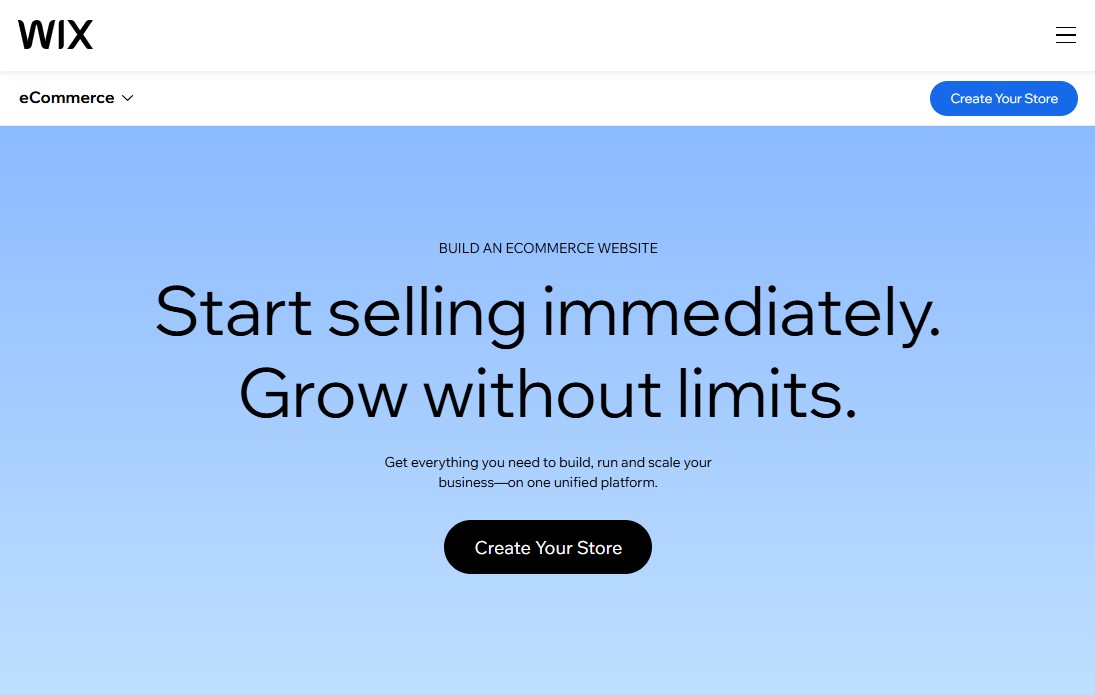
Not a fan of strict marketplace rules? Wix is one of the best Etsy alternatives, offering full control over your online store. You can build a custom website that truly reflects your brand.
Like Etsy, Wix lets you sell products with a built-in checkout. But it goes further. You can design your entire site, shape your brand, and build real customer loyalty—all in one place.
What really stands out is the creative freedom. You can build your store from scratch or use ready-made tools. Set up email marketing, use SEO features, and connect your own domain without juggling multiple platforms.
Wix also offers over 900 well-designed templates. There’s something for almost every type of business, from online shops to portfolios. The platform is built for speed, too, which is important if you want better SEO and a smoother user experience.
Another big plus is multichannel selling. Wix connects easily with platforms like eBay, Amazon, and Etsy. This means you’re not stuck relying on just one channel. You can reach more people and grow your sales across different marketplaces.
Pros of Wix:
- User-friendly drag-and-drop builder with no coding required
- Lower learning curve, ideal for beginners and visual thinkers
- No transaction fees beyond payment processing
- App market for additional functionality
- Multi-channel selling to Facebook, Instagram, Amazon, and Google
- Active support community and tutorials
Cons of Wix:
- Limited advanced eCommerce features compared to dedicated platforms
- Costs rise with added features
- Template switching is limited
Pricing:
Wix’s ecommerce plan starts at $29/month (4% transaction fee).
How to Choose the Right Etsy Alternative?
Not every platform works the same way. The best Etsy alternative really depends on what you sell, how much you want to spend, and where you want your business to go. In the end, the right choice should help you sell more without making things harder.
Here are a few things worth thinking about:
1) Budget and Fees
Each platform has its own pricing model. Some charge listing fees or take a cut from each sale. Others ask for a monthly subscription. A few bundle payment processing into their fees. Take a close look so you know exactly what you’ll be paying.
2) What You’re Selling
Your product type matters. If you sell handmade items, some marketplaces attract buyers who look for unique goods. If you focus on digital products, certain platforms offer better tools for creators. Pick one that fits what you make.
3) Your Target Audience
Think about your ideal customer. Where do they usually shop? Some platforms draw in niche, artisan-focused buyers. Others have a wider, more general audience.
4) How Much Control You Want
Running your own website gives you full control over your brand and design. You can shape the entire customer experience. Marketplaces, on the other hand, can bring in traffic but often come with rules and limits.
5) Your Long-Term Plans
Where do you see your business in a year or two? Some platforms are great for growing a brand over time. Others work better if you’re just getting started and want to test things out.
6) Traffic vs Marketing
Marketplaces come with built-in traffic, which can help you get sales faster. But if you want to grow on your own terms, having your own store gives you more freedom to market and build a brand.
7) Tools and Features
Check what each platform offers. Look at inventory tracking, shipping support, discounts, and store management tools. Make sure it fits how you plan to run your shop.
8) Ease of Use
Most platforms offer free trials or demos. Try a few and see which one feels right. The easier it is to use, the smoother your day-to-day selling will be.
Final Thoughts: Best Etsy Alternatives
Etsy might have opened the door for many small business owners to start selling online, but it’s no longer the only path.
With rising fees, increased competition, and limited control over branding, it’s no surprise that many sellers are exploring other options. That’s where these Etsy alternatives for sellers come in.
From the flexibility of Shopify or WooCommerce to niche-friendly platforms like Amazon Handmade or Redbubble, each offers unique features that help you take control of your store.
You’ll find platforms with no listing fees, full customization, built-in marketing tools, or a ready-made customer base.
Find your ideal one and give it a chance. Users are waiting to see your potential!
For more, check out these other helpful resources:
- Best Shopify Alternatives – Top 11 Picks
- 12 Best Gumroad Alternatives for Creators & Sellers
- Top 10 WooCommerce Alternatives for an eCommerce Store
Lastly, follow us on Facebook and X (formerly Twitter) to stay updated on the latest WordPress and blogging-related articles.
Frequently Asked Questions
What are the best Etsy alternatives for handmade sellers in 2026?The best Etsy alternatives depend on your goals. Shopify is ideal for building an independent brand, while Amazon Handmade and eBay offer massive marketplace traffic for established artisans.
The best Etsy alternatives depend on your goals. Shopify is ideal for building an independent brand, while Amazon Handmade and eBay offer massive marketplace traffic for established artisans.
Is Shopify a better platform than Etsy for small businesses?Shopify is superior if you want to build a long-term, independent brand. It offers total design control and customer ownership, though you are responsible for driving your own traffic.
Shopify is superior if you want to build a long-term, independent brand. It offers total design control and customer ownership, though you are responsible for driving your own traffic.
Can I sell on both Etsy and its alternatives simultaneously?Yes, many successful sellers use a multi-channel strategy. They keep an Etsy shop for built-in traffic while using independent sites like Shopify or Big Cartel to build their own brand.
Yes, many successful sellers use a multi-channel strategy. They keep an Etsy shop for built-in traffic while using independent sites like Shopify or Big Cartel to build their own brand.
Does Amazon Handmade serve as a good alternative to Etsy?Amazon Handmade is a powerful alternative for sellers wanting access to Amazon’s massive customer base. It offers high reach but comes with stricter approval processes and higher referral fees.
Amazon Handmade is a powerful alternative for sellers wanting access to Amazon’s massive customer base. It offers high reach but comes with stricter approval processes and higher referral fees.
Are there Etsy alternatives specifically for digital product sellers?Yes, platforms like Gumroad, Shopify, and Easy Digital Downloads are excellent Etsy alternatives. They provide streamlined delivery and management tools specifically designed for digital assets, templates, and courses.
Yes, platforms like Gumroad, Shopify, and Easy Digital Downloads are excellent Etsy alternatives. They provide streamlined delivery and management tools specifically designed for digital assets, templates, and courses.
Is Etsy still worth it?Although its original audience has expanded, Etsy remains the best marketplace for selling handmade products worldwide. The marketplace is also worth selling products with few to no upfront costs, as it doesn’t charge subscriptions.
Although its original audience has expanded, Etsy remains the best marketplace for selling handmade products worldwide. The marketplace is also worth selling products with few to no upfront costs, as it doesn’t charge subscriptions.
What’s the difference between Shopify and Etsy?Shopify is a dedicated eCommerce platform that creates a standalone website, while Etsy is a marketplace.
Shopify is a dedicated eCommerce platform that creates a standalone website, while Etsy is a marketplace.
Which Etsy alternatives have the lowest seller fees?Big Cartel has the lowest fees with a free plan for up to 5 products and zero transaction fees. Paid plans start at $9.99/month.
Big Cartel has the lowest fees with a free plan for up to 5 products and zero transaction fees. Paid plans start at $9.99/month.
Who is Etsy’s biggest competitor?Etsy’s biggest competitor is Amazon Handmade. Like Etsy, Amazon Handmade focuses on handmade and unique products, but it benefits from Amazon’s massive customer base and global reach. Sellers can tap into Amazon’s extensive marketing and fulfillment services, making it an attractive option for artisans seeking more visibility.
Etsy’s biggest competitor is Amazon Handmade. Like Etsy, Amazon Handmade focuses on handmade and unique products, but it benefits from Amazon’s massive customer base and global reach. Sellers can tap into Amazon’s extensive marketing and fulfillment services, making it an attractive option for artisans seeking more visibility.
