15 January 2026
11 Best Sales Funnel Builders in 2026: Top Tools Reviewed
If you’re serious about turning clicks into customers, your sales funnel isn’t optional—it’s everything.
The right sales funnel builder can be the difference between visitors who bounce and buyers who convert on autopilot.
With dozens of tools promising higher conversions, smarter automation, and faster growth, choosing the best one can feel overwhelming.
That’s where this article comes in. We’ve reviewed the 11 best sales funnel builders on the market to help you find the platform that actually delivers—whether you’re launching your first funnel or optimizing a high-converting machine.
Let’s dive in!
What is a Sales Funnel?
A sales funnel is a strategic marketing framework that maps the theoretical journey a prospect takes from their initial brand discovery to a finalized purchase.
It is visualized as a funnel because while many people enter at the top (Awareness), the pool of prospects narrows at each stage as they are qualified or disqualified, eventually resulting in a smaller group of loyal customers at the bottom.
Key Stages of a Sales Funnel:
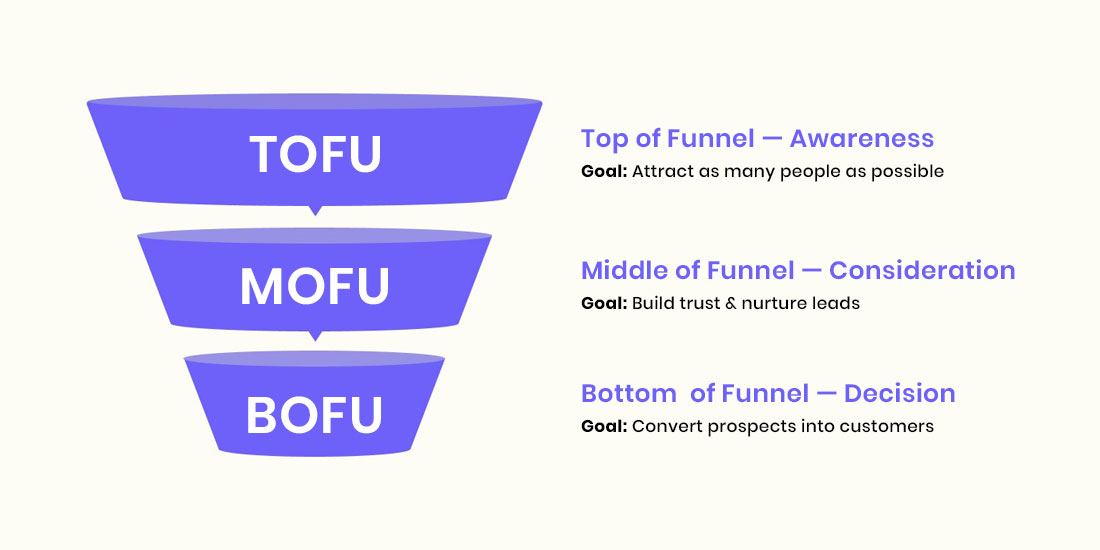
While models vary, most high-converting funnels follow the AIDA or TOFU-MOFU-BOFU structure:
- Top of Funnel (TOFU) – Awareness: The prospect identifies a problem and discovers your brand through content, ads, or social media.
- Middle of Funnel (MOFU) – Consideration: The prospect evaluates your solution against competitors. This is the “educational” phase where lead magnets and webinars are most effective.
- Bottom of Funnel (BOFU) – Decision: The final stage where the prospect converts into a customer via a sales call, checkout page, or free trial.
Best Sales Funnel Examples
No two sales funnels look exactly the same. That said, most of them share a few core elements. A sign-up form is almost always one of them. Email follow-ups are another.
Let’s say you’re an entrepreneur selling online marketing courses. A typical sales funnel might look like this:
- First, a potential customer sees a Facebook ad offering practical SEO tips. The call to action is simple and clear: Download my complete SEO guide.
- They click the ad and are redirected to the landing page. In exchange for a free guide, they enter their email address and opt in to receive future emails.
- The next day, they get a friendly newsletter. Inside is a link to your full courses.
- Interested, they sign up for one course.
- Over time, they continue to receive helpful emails. Some include limited-time discounts. Eventually, they enroll in another course.
Behind the scenes, every step is tracked by your sales funnel software. You can see exactly where people lose interest and where they convert. This makes it much easier to spot weak points and improve results.
Most sales funnel builders also bundle key tools together. You get landing page editors, email marketing, and often course or webinar hosting. Everything lives in one place. That setup is usually far more affordable—and far less stressful—than stitching together multiple platforms.
What is a Sales Funnel Builder?
A sales funnel builder is an all-in-one tool that helps businesses design and manage the entire customer journey from start to finish. It lets you visually map out how someone moves from first discovering your brand—maybe through an ad or social post—to showing interest, signing up, and eventually buying.
These platforms make the process simple. You can build landing pages with drag-and-drop editors, automate follow-up emails, and track performance with built-in analytics. No coding is required. The goal is straightforward: remove friction, guide prospects at the right pace, and turn more visitors into customers.
Why Sales Funnels Software Is Important?
Here’s why they are important:
- Create a clear customer journey: A funnel builder helps you control how prospects move from awareness to purchase. Each step has a purpose, so visitors always know what to do next.
- Increase conversions: By using targeted pages, follow-up emails, and automation, funnel builders reduce drop-offs. This means more leads turn into paying customers without increasing traffic.
- Save time with automation: Tasks like email follow-ups, lead nurturing, and customer segmentation happen automatically. You spend less time on manual work and more time growing your business.
- Make marketing measurable: Built-in analytics show where people drop off and what’s working. This makes it easier to fix weak spots and improve results over time.
- Scale with your business: Once a funnel is built and optimized, it can handle more traffic without extra effort. This makes growth predictable and sustainable.
In short, sales funnel builders help businesses convert attention into revenue by combining strategy, automation, and data into one powerful system.
How to Choose the Best Sales Funnel Builder?
Here’s a simple, practical guide to choosing the best sales funnel builder for your business:
- Your Goal: Start by defining what you need the funnel builder to do. Are you launching products, capturing leads, running webinars, or selling courses? Your goals will determine the features you actually need.
- Ease of Use: An intuitive, drag-and-drop interface that makes it simple to set up and customise your funnels.
- Customization and Flexibility: The software you pick should be customizable. Whether it’s landing pages, emails, or other funnel stages, to fit your brand and specific audience.
- Integration Capabilities: Your funnel tool should play nicely with the tools you already use—like CRM systems, email platforms, payment gateways, etc. Good integrations make operations smoother.
- Analytics and Reporting: Look for software that provides detail analytics and reporting features. This will help you track performance, understand customer behaviour, and make data-driven decisions.
- Extensive Templates: A wide selection of pre-built funnel templates that you can start with and then personalise.
- Scalability: Pick a platform that grows with you. If your business expands, you shouldn’t have to switch tools later.
11 Best Sales Funnel Builders and Software
Below are the top-rated platforms for creating sales funnels:
1. ClickFunnels

First on our list of best sales funnel builders is ClickFunnels. It’s a powerful all-in-one platform built to help businesses create, manage, and scale sales funnels without unnecessary complexity.
While funnels are its core focus, ClickFunnels goes well beyond that, offering a wide range of marketing, CRM, and customer support tools in one place.
At its best, ClickFunnels helps you guide potential customers through every stage of the sales journey. It starts with awareness and continues through to conversion. You can store and manage customer profiles, handle support requests, and fine-tune your content for SEO.
It also lets you build full websites and high-converting landing pages. In short, it’s designed to keep everything you need under one roof.
ClickFunnels Pros:
- Intuitive drag-and-drop editor for funnel creation without coding.
- Supports multi-step funnels, from lead generation to membership sites.
- Choose from hundreds of pre-designed templates.
- Built-in marketing tools for email automation, A/B testing, payment processing, and membership areas.
- Offers tools to set up and track affiliate programs.
ClickFunnels Cons:
- It can be expensive, particularly for small businesses or startups.
- The design flexibility is limited.
ClickFunnels Pricing:
Plans start at $97/month with a 14-days free trial.
Try ClickFunnels Free for 14-Days
2. Systeme.io
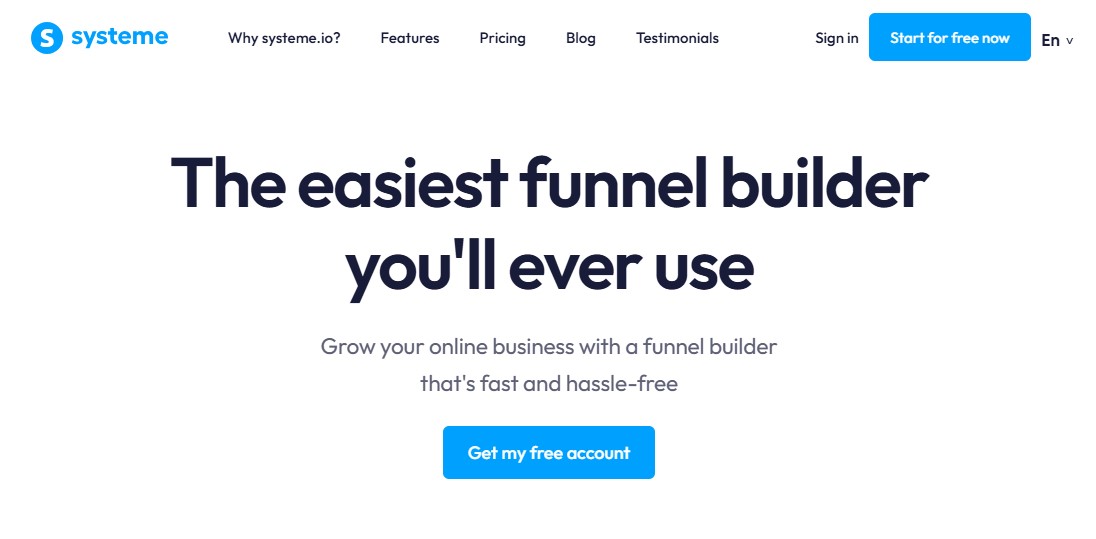
If you want a free sales funnel builder to test ideas before paying for a premium tool, Systeme.io is worth a look.
It lets you build simple funnels, send emails, sell digital products, and even launch a basic course. Everything lives in one dashboard. It feels like a scrappy all-in-one tool that’s genuinely trying to help you move fast and make progress.
With Systeme.io, you can create clean, high-converting landing pages and connect them to your email list, payment processor, and membership areas. You can also improve your funnels over time using automation rules and A/B testing to see what actually converts.
The best part? It’s ridiculously easy to set up. You don’t need to be technical or spend hours figuring things out.
The email marketing side is solid, too. You get features like list segmentation and automated email sequences, and everything ties directly into your funnels and pages. That makes running email campaigns feel simple instead of overwhelming.
Overall, this tool is a great fit if you’re in MVP mode. It’s ideal for testing an idea, validating an offer, or launching your first online funnel without dealing with a steep tech learning curve.
Systeme.io Pros:
- Drag-and-drop interface, making it easy to build pages and funnels quickly.
- Automate your email marketing with pre-built templates and sequences.
- Share your knowledge and make money by creating and selling online courses.
- Run evergreen webinars to grow your audience and make sales.
- Send unlimited emails and create email campaigns.
- Excellent free plan with affordable paid plans.
- Sell physical or digital products with integrated payment gateways.
- No transaction fees for accepting payments using Stripe or PayPal.
Systeme.io Cons:
- Analytics and automation are basic compared to more advanced sales funnel builders.
- Fewer third-party integrations compared to competitors.
Systeme.io Pricing:
Free forever plan available. The pro plan starts at $17/month.
3. GetResponse
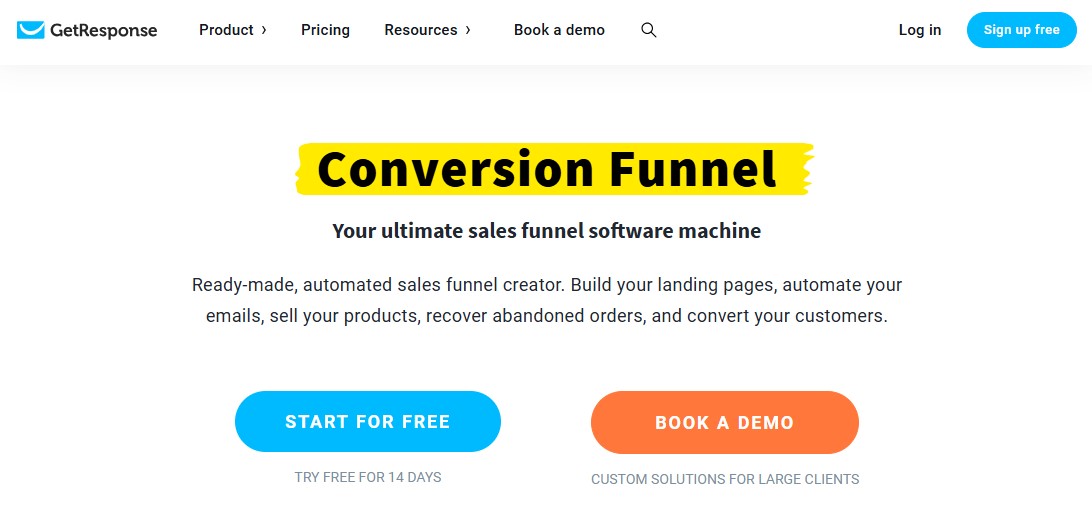
GetResponse is easily one of the most well-rounded tools on this list. Its standout feature is the Conversion Funnel, which lets you build an entire marketing system in one place.
You can run social media campaigns, create landing pages, host webinars, and automate emails without juggling multiple platforms. You can also sell products directly through GetResponse or connect it to your existing online store.
One feature that really sets it apart is the Content Monetization plan. It lets you create, deliver, and promote an online course from within the platform. That’s a rare capability and something you won’t find in most email marketing tools.
When it comes to sales funnels, GetResponse keeps things simple. The Conversion Funnel is fast to set up and easy to understand. You can clearly see how leads move from one step to the next. The platform also offers a solid range of clean, modern templates that look professional right out of the box.
If webinars are a key part of your business, GetResponse is especially worth a look.
GetResponse Pros:
- All-in-one platform for email marketing, landing pages, automation, webinars, and sales funnels.
- Powerful marketing automation and segmentation tools.
- Includes webinars, which many sales funnel software do not.
- Features to create and sell courses directly on the platform.
- Offers excellent, multi-language customer support and robust GDPR compliance.
GetResponse Cons:
- You can build only 1 custom automation in the Starter plan.
- Pricing increases quickly as contact lists grow.
GetResponse Pricing:
Free plan available for basic tools, no sales funnels. The pro plan for sales funnels starts at $59/month with a 14-days free trial.
4. Kartra

Kartra is an all-in-one online business platform built to make selling simpler. It helps you create, market, and sell products or services without juggling multiple tools.
You can build high-converting sales funnels, launch membership sites, run email campaigns, and host videos—all inside one system. Everything works together, saving time and reducing headaches.
Its drag-and-drop builder is easy to use, even if you’re not technical. You can automate marketing, manage leads, track performance, and improve customer relationships from a single dashboard.
This makes it a powerful sales funnel software platform for businesses seeking a comprehensive set of marketing tools in one place.
Kartra Pros:
- Relatively easy to use, allowing quick setup of funnels and campaigns.
- drag-and-drop page builder for easy creation of lead-generating landing pages.
- Robust email automation, segmentation, A/B testing, and detailed analytics for campaigns and user behavior.
- Seamlessly connects features like checkout, affiliate management, and video hosting, with strong affiliate management tools.
- Known for good customer support and strong email deliverability.
- Has more features at a lower cost compared to other similar tools.
- Pre-made templates for marketing funnels and email marketing campaigns.
Kartra Cons:
- Entry-level plan charge 5% transaction fees on your sales.
- Limited integrations with third-party tools.
- Steeper learning curve and more setup work than some other sales funnel platforms.
Kartra Pricing:
Plans start at $59/month with a 30-days free trial.
5. Keap
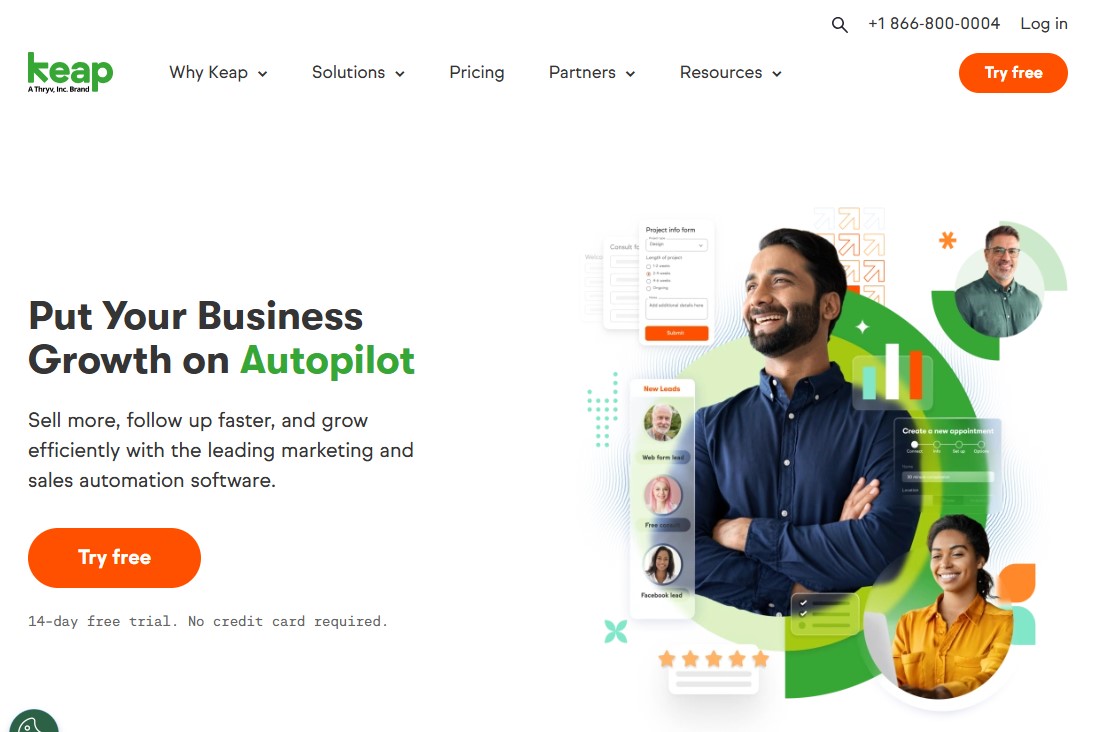
Keap, formerly known as Infusionsoft, is a powerful all-in-one CRM and marketing automation platform built for busy small businesses that want everything in one place. It’s designed to simplify your day, not add more tools to manage.
Keap helps you capture leads in several ways. You can create custom forms and landing pages that fit your brand and turn visitors into contacts with minimal effort.
Once those leads are in your system, Keap makes it easy to stay in touch. You can send targeted email campaigns, trigger automated text messages, and keep every conversation organized without chasing details.
In addition, the platform also includes a clear, visual sales pipeline. It lets you track deals at a glance, manage opportunities as they move forward, and automate follow-up tasks so nothing slips through the cracks.
Keap Pros:
- Drag-and-drop builders for landing pages and intuitive automation rule creation.
- Excellent for automating repetitive tasks, lead nurturing, and follow-ups.
- Automatically capture leads via forms, landing pages, and social media.
- Built-in payment processors for payment management.
- Automatically tag and segment contacts for marketing purposes.
- Email and SMS marketing.
Keap Cons:
- Expensive compared to other sales funnel builders.
- Steep learning curve and complexity, making it challenging for some users.
Keap Pricing:
Plans start at $299/month with a 14-days free trial.
6. SeedProd

SeedProd is a drag-and-drop WordPress landing page builder and one of the best sales funnel builders for WordPress. It lets you create full websites, high-converting landing pages, and complete sales funnels—all without writing a single line of code.
You can jump in with ready-made templates for sales pages, webinar registrations, lead magnets, and thank-you pages. If you prefer more control, the visual editor lets you design an entire WooCommerce site from scratch. You get dedicated blocks for product pages, checkout flows, shopping carts, and custom product grids, so everything fits together naturally.
When we tested SeedProd, the funnel-building experience really stood out. Creating a smooth path from opt-in to checkout felt effortless. We added upsells, related products, and payment buttons directly in the editor, significantly reducing setup time.
Email integration was another strong point. Connecting forms to tools like Constant Contact, ConvertKit, and ActiveCampaign took just a few clicks. That made it easy to run email campaigns directly from our funnels, without piling on extra plugins or slowing down the site.
Overall, if you are using WordPress and want an easy, all-in-one WordPress sales funnel builder with WooCommerce support, SeedProd is our best option.
SeedProd Pros:
- Beginner-friendly drag-and-drop funnel builder.
- Large library of landing pages and website templates.
- Full WooCommerce support with product and checkout blocks.
- Seamless integrations with major email marketing platforms.
SeedProd Cons:
- Only work with a WordPress site.
- Can’t create multi-step funnels.
- No A/B testing for conversions.
- Advanced WooCommerce features require the Elite plan.
SeedProd Pricing:
Plans start at $39.50/year.
7. CartFlows
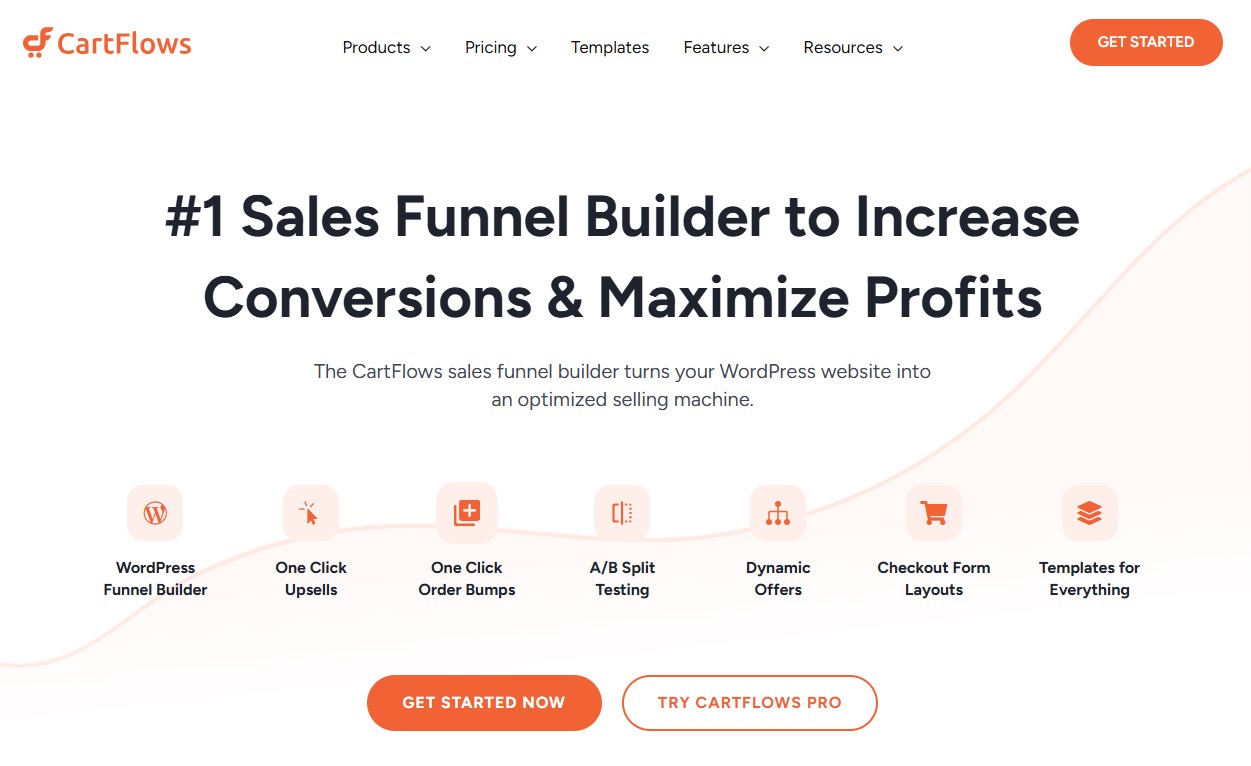
CartFlows is a WordPress sales funnel builder and one of the best sales funnel creators for an eCommerce store.
It gives you everything you need to increase revenue without adding complexity. You can create order bumps, one-click upsells, A/B split tests, and dynamic offers with ease. The drag-and-drop funnel builder makes it simple to design professional sales funnels that work across different niches.
CartFlows is built with usability in mind. The interface is clean, intuitive, and easy to navigate, even if you’re not a developer. For page design, you’ll typically use a page builder like Elementor or Beaver Builder. Both integrate smoothly, making customization fast and straightforward.
CartFlows Pros:
- Easy to configure and edit templates, which help enhance the checkout process.
- Offer full sales funnels with upsells, downsells, and order bumps to increase average order value.
- Conversion-optimized templates for popular page builders (Elementor, Divi, Gutenberg).
- Seamlessly integrates with WooCommerce, making it ideal for WordPress store owners.
- Provides built-in tools to track funnel performance, revenue, and conversion rates.
- Free version for basic funnel building and checkout improvements.
- Lifetime pricing option available.
CartFlows Cons:
- Only works with WordPress and WooCommerce, not suitable for other platforms.
- Doesn’t include its own CRM or advanced marketing automation tools, requiring integrations.
- A/B split testing and funnel analytics are available on the higher plan.
CartFlows Pricing:
Free plugin available. The paid plans start at $189/year or $699 for a lifetime.
8. involve.me
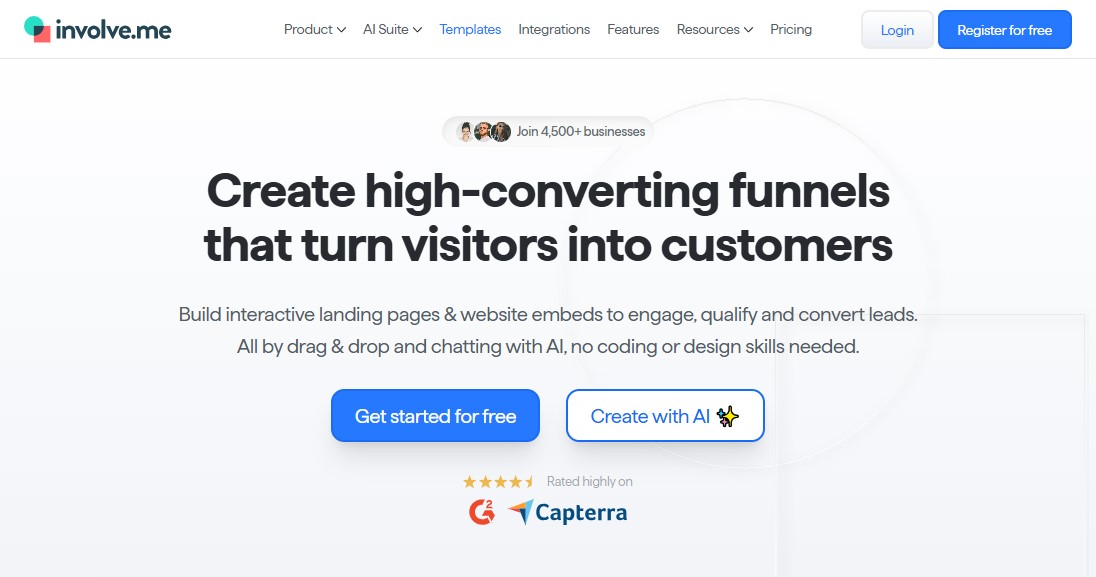
Involve.me is a surprisingly powerful sales funnel builder, especially for the price. In fact, it’s the affordable sales funnel solutions for small businesses on this list, and even comes with a generous free-forever plan.
The platform makes it easy to build interactive sales funnels without touching a single line of code. That alone makes it a great fit for startups on a tight budget or beginners who want something simple that just works.
At the heart of involve.me is a smooth drag-and-drop editor. You can create multi-step funnels using forms, quizzes, calculators, and surveys. These elements work seamlessly together to keep users engaged, collect lead data, and guide visitors toward personalized results. All of this happens while the system quietly qualifies and profiles leads in the background.
On top of that, involve.me keeps getting better. You get access to more than 300 ready-made templates, AI-powered funnel creation, strong personalization features, and over 60 native integrations. Taken together, it’s a flexible, well-rounded toolkit that can handle almost any campaign or use case you throw at it.
involve.me Pros:
- Drag-and-drop funnel editor for creating multi-step lead flows.
- Personalized funnels based on user inputs.
- Built-in analytics and A/B testing to track performance and improve your funnel’s conversion rates.
- Payment gateway options for online sales.
- Offer 300+ templates or let the AI build a funnel for you.
- Easily publish your funnel as a standalone landing page, a website embed, or a pop-up.
- Integrates with over 65+ marketing tools.
involve.me Cons:
- Not a full sales funnel builder.
- No native CRM or email automation.
involve.me Pricing:
Free plan available. The paid plans start at $49/month.
9. HubSpot
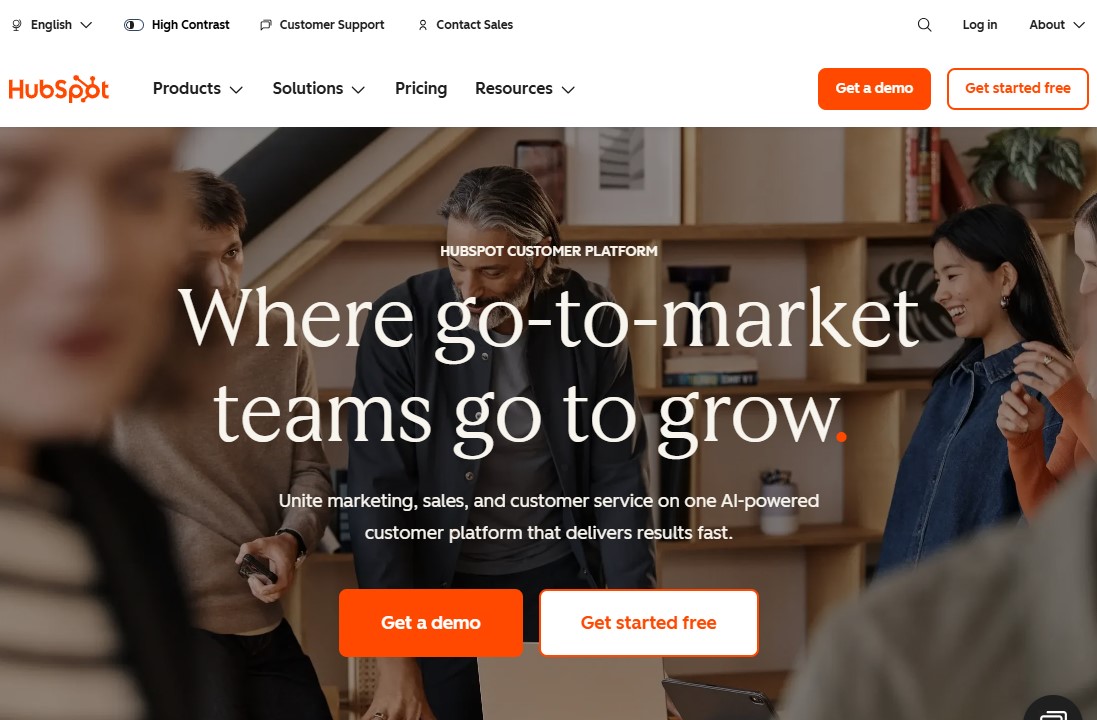
HubSpot is a CRM and marketing platform built to manage your entire sales funnel in one place. It brings together marketing, sales, and customer service tools, so teams don’t have to jump between systems.
HubSpot includes a dedicated funnel builder, over 100 ready-made page templates, a built-in CMS, and powerful automation. You can track quotas, spot sales trends, and shape your pipeline to match how your team actually sells.
In addition, it gives you a clear view of every lead moving through your funnel. With personalized follow-ups and smooth handoffs, it’s easier to engage sales-qualified leads and turn them into customers.
The Sales Hub shows exactly where each deal stands. You can see who’s been contacted, who’s interested, who’s received a contract, and who’s already converted. Nothing gets lost or overlooked.
When you create a new deal, HubSpot saves time by filling in most of the details for you. You can use contact history to build segments based on site visits, email clicks, and other behaviors. From there, you can send targeted content and email campaigns that nurture leads at the right pace.
Furthermore, HubSpot’s reporting and analytics tools give you a clear picture of how your funnel is performing. You can track conversion rates, deal progress, and revenue in real time. These insights help you fine-tune your funnel and improve how your team sells.
Overall, HubSpot is one of the most complete marketing tools and a sales funnel builder on the market.
HubSpot Pros:
- Full CRM software platform with different products working well together.
- Create landing pages, forms, and pop-ups to capture leads.
- Set up automated workflows for emails, lead scoring, and follow-ups.
- Strong analytics and attribution reporting.
- Mobile apps for managing sales funnels on-the-go.
- Offers excellent free tools to get started.
HubSpot Cons:
- High pricing compared with other sales funnel tools
- The extensive features can be complex initially.
HubSpot Pricing:
Free plan available. The paid plans start at $15/month.
10. FunnelKit
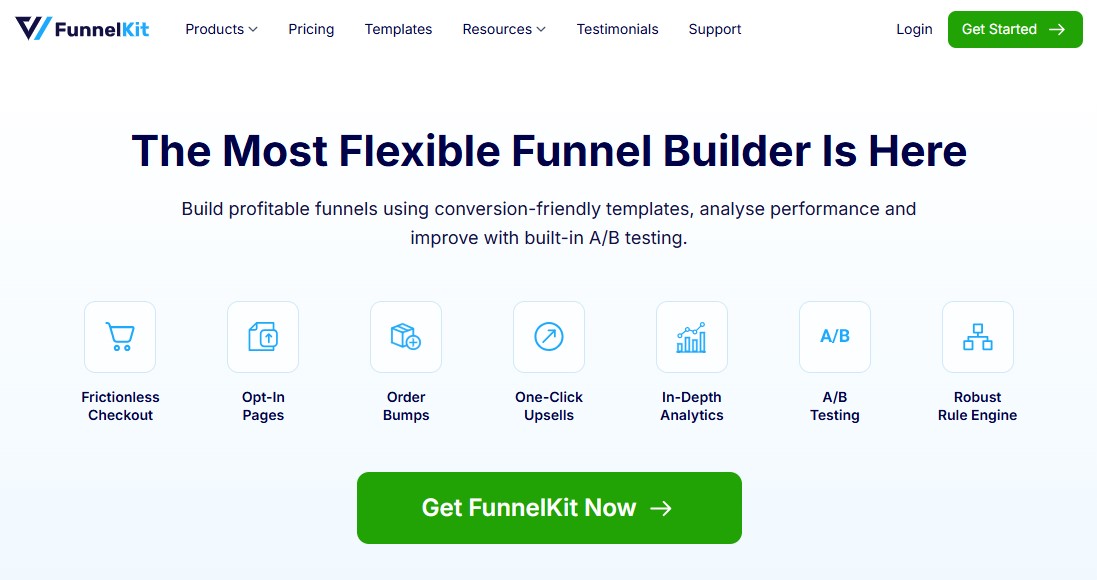
FunnelKit, previously known as WooFunnels, is a powerful WordPress plugin and one of the best sales funnel builders for WooCommerce stores.
With FunnelKit, you can build complete funnels from start to finish. This includes lead capture pages, landing pages, opt-ins, sales pages, optimized WooCommerce checkouts, upsells, and thank-you pages—all in one place.
The plugin works well for businesses of any size. It gives you full control over how your customers move through your store, making it easy to create personalized shopping experiences that increase conversions and reduce cart abandonment. Features like order bumps, one-click upsells, A/B testing, and in-depth analytics help you fine-tune every step of the funnel.
Best of all, FunnelKit brings everything together in a single, affordable platform that’s easy to use and built to scale.
FunnelKit Pros:
- Hundreds of ready-to-use templates for fast funnel setup.
- One-click upsells, downsells, and order bumps.
- Advanced automation with email broadcasts and segmentation.
- Create unlimited sales funnels.
- Replaces $200+ monthly in various SaaS tools.
- White-label options for agencies.
FunnelKit Cons:
- Only work with WordPress.
- Resource-intensive, requiring good WordPress hosting.
FunnelKit Pricing:
Free version available on WordPress.org. The pro version starts at $99.50/year.
11. OptimizePress
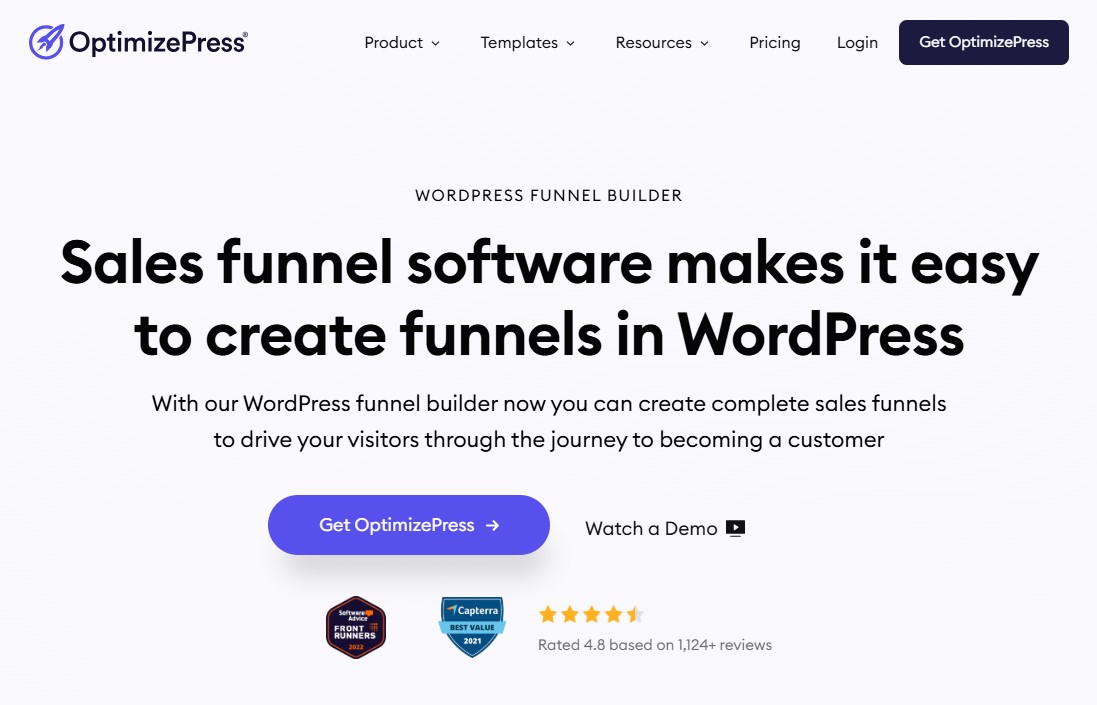
OptimizePress is a WordPress funnel builder that helps you create a complete sales funnel with ease.
It offers a no-code funnel-building solution with conversion-optimized features. Some of these include a visual funnel builder, a powerful checkout plugin, and a robust analytics platform.
Furthermore, the platform also includes a wide range of conversion-focused templates. These are backed by practical training and flexible integrations, so you can build funnels that are not only attractive but effective.
On top of that, one-click upsells and downsells make it easy to increase your average order value. You can optimize every stage of your funnel and boost revenue without extra effort.
With OptimizePress, you’re not just getting a page builder. You’re getting a complete marketing toolkit built to support real growth and deliver measurable results for your business.
OptimizePress Pros:
- Drag-and-drop interface with templates makes page creation accessible without coding.
- Offers order bumps, upsells, downsells, and A/B testing.
- Sell your products with optimized checkout forms.
- Hundreds of templates for landing pages, webinar registration, sales pages, upsells, and downsells.
- You own everything on your own servers (no platform dependency).
- Annual pricing saves thousands compared to monthly SaaS platforms.
- Good training, documentation, and a strong community.
OptimizePress Cons:
- Runs on WordPress, so you will need a WordPress-based website.
- No built-in email marketing—separate tool required.
OptimizePress Pricing:
Plans start at $129/year with a 14-day money-back guarantee.
Bonus: ActiveCampaign
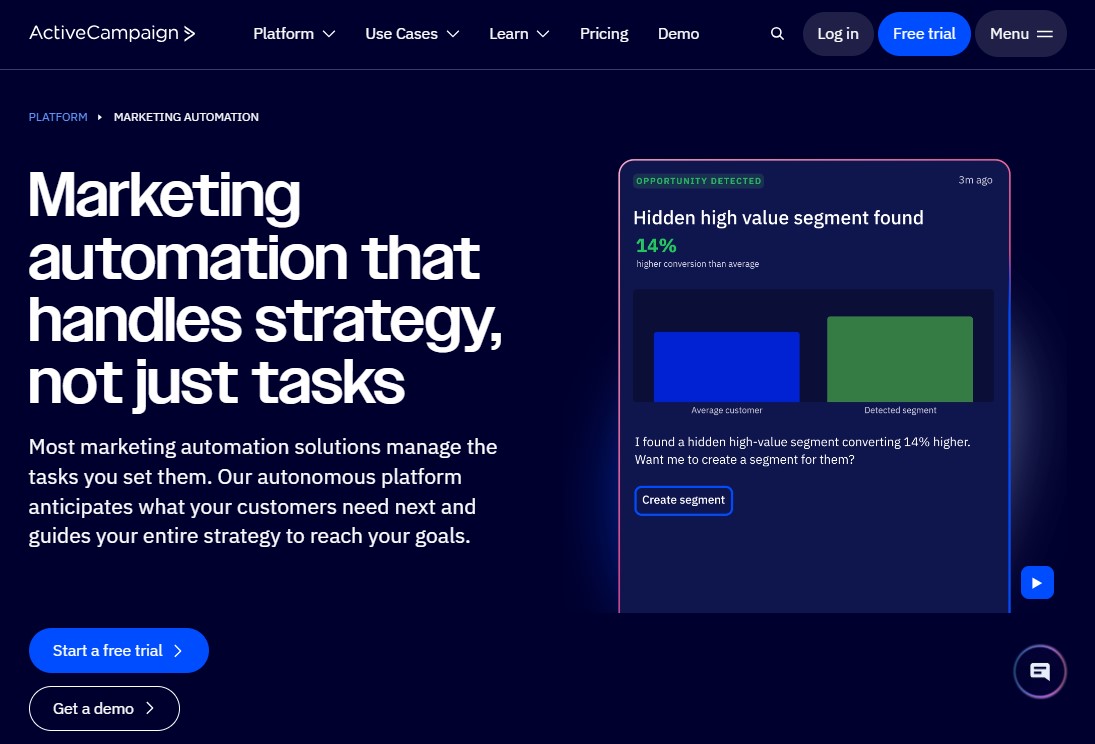
ActiveCampaign, like GetResponse, is an all-in-one email marketing platform built to help you create sales funnels that actually convert.
It gives you everything you need to capture leads and guide them smoothly toward a purchase. You’ll find an easy-to-use form builder, flexible email and landing page content, modern templates, and powerful marketing automation. It also includes a built-in CRM and integrates with Facebook Custom Audiences, making it easier to reach the right people at the right time.
You can even accept payments by connecting ActiveCampaign with services like Stripe or Spiffy, turning your funnel into a complete sales system.
This platform is a strong fit for businesses that care about smart automation, personalized messaging, and data-backed decisions.
Whether you run an online store, a service business, or a B2B company, ActiveCampaign gives you the tools to build effective funnels, nurture leads, and grow your revenue with confidence.
ActiveCampaign Pros:
- Strong automation features.
- Powerful segmentation for targeted campaigns.
- Multi-channel messaging to engage leads across platforms.
- Cost-effective solution with a robust feature set.
- Supported 14 different languages outside of English.
ActiveCampaign Cons:
- Webinar hosting isn’t possible, though there are a number of integration options.
- It doesn’t include affiliate marketing or a membership area.
- Pricing increases quickly as your list grows.
ActiveCampaign Pricing:
Plans start at $15/month with a 14-days free trial.
Try ActiveCampaign Free for 14-Days
Conclusion: The Best Sales Funnel Builder
Choosing the right sales funnel builder isn’t just a tech decision. It directly affects how smoothly your business turns visitors into paying customers.
There’s no universal “best” option. The right tool depends on your goals, budget, level of hands-on involvement, and the kinds of funnels you plan to run.
Some platforms, like ClickFunnels and Kartra, are best for an all-in-one setup. Everything lives in one place, saving time and reducing friction.
Others, such as Systeme.io and involve.me, are great if you’re testing ideas or working with a smaller budget. They’re simple, affordable, and easy to launch fast.
If you already run a WordPress or WooCommerce site, tools like SeedProd, CartFlows, and OptimizePress give you more control. You own your setup, keep your flexibility, and can customize funnels exactly the way you want.
For businesses that rely heavily on automation and customer data, platforms like HubSpot and Keap stand out. They offer deeper CRM features and more advanced workflows.
What all of these tools do well is simplify the customer journey. They help you automate follow-ups and increase conversions without adding complexity.
The smart move is to focus on what you need right now, while picking a platform that won’t hold you back later.
With the right sales funnel software, you’ll scale more efficiently, convert more leads, and build a more predictable online business in 2026 and beyond.
For more, check out these other helpful resources:
Lastly, follow us on Facebook and X (formerly Twitter) to stay updated on the latest WordPress and blogging-related articles.
Frequently Asked Questions
What is the best sales funnel builder for beginners in 2026?Systeme.io is widely considered the best for beginners due to its intuitive “all-in-one” interface and generous free tier. It allows users to build landing pages, manage email lists, and host courses without needing technical coding skills, making it a low-risk entry point for new entrepreneurs.
Systeme.io is widely considered the best for beginners due to its intuitive “all-in-one” interface and generous free tier. It allows users to build landing pages, manage email lists, and host courses without needing technical coding skills, making it a low-risk entry point for new entrepreneurs.
How much does sales funnel software typically cost?Pricing varies significantly based on features. Budget-friendly options like Systeme.io start around $17/month, while industry leaders like ClickFunnels range from $97 to $297/month. Many platforms offer free versions or trials, allowing businesses to scale their investment as their lead generation and revenue grow.
Pricing varies significantly based on features. Budget-friendly options like Systeme.io start around $17/month, while industry leaders like ClickFunnels range from $97 to $297/month. Many platforms offer free versions or trials, allowing businesses to scale their investment as their lead generation and revenue grow.
Can I build a sales funnel for free?Yes, several platforms offer powerful free plans. Systeme.io and HubSpot provide free entry-level tools for building basic funnels and managing contacts. While these plans often have limits on the number of pages or emails, they are excellent for testing your marketing strategy before committing financially.
Yes, several platforms offer powerful free plans. Systeme.io and HubSpot provide free entry-level tools for building basic funnels and managing contacts. While these plans often have limits on the number of pages or emails, they are excellent for testing your marketing strategy before committing financially.
ClickFunnels vs. Systeme.io: Which is better?ClickFunnels is the premium choice for established businesses needing advanced marketing features and high-volume templates. Systeme.io is better for those seeking affordability and simplicity. If you need a comprehensive, high-conversion “ecosystem,” choose ClickFunnels; for a cost-effective, easy-to-manage alternative, Systeme.io is the winner.
ClickFunnels is the premium choice for established businesses needing advanced marketing features and high-volume templates. Systeme.io is better for those seeking affordability and simplicity. If you need a comprehensive, high-conversion “ecosystem,” choose ClickFunnels; for a cost-effective, easy-to-manage alternative, Systeme.io is the winner.
Do I need separate email marketing software with a funnel builder?Most modern funnel builders like ClickFunnels, Kartra, and Systeme.io include built-in email automation. However, if you use a WordPress-based builder like CartFlows, you will likely need a dedicated email service provider (ESP) like Mailchimp or ConvertKit to handle your lead nurturing and broadcast sequences.
Most modern funnel builders like ClickFunnels, Kartra, and Systeme.io include built-in email automation. However, if you use a WordPress-based builder like CartFlows, you will likely need a dedicated email service provider (ESP) like Mailchimp or ConvertKit to handle your lead nurturing and broadcast sequences.
Which sales funnel builder is best for WordPress?FunnelKit (formerly WooFunnels) and CartFlows are the top-rated funnel builders for WordPress. They integrate natively with WooCommerce, allowing you to create custom checkout pages, one-click upsells, and order bumps directly within your WordPress dashboard, offering more flexibility and lower long-term costs than standalone SaaS platforms.
FunnelKit (formerly WooFunnels) and CartFlows are the top-rated funnel builders for WordPress. They integrate natively with WooCommerce, allowing you to create custom checkout pages, one-click upsells, and order bumps directly within your WordPress dashboard, offering more flexibility and lower long-term costs than standalone SaaS platforms.
Can I build a sales funnel without a website?Yes, you can build a sales funnel without a traditional website using standalone builders like ClickFunnels or GetResponse. These platforms host your landing pages and sales sequences on their own servers, allowing you to drive traffic directly to specific conversion points without managing a full site.
Yes, you can build a sales funnel without a traditional website using standalone builders like ClickFunnels or GetResponse. These platforms host your landing pages and sales sequences on their own servers, allowing you to drive traffic directly to specific conversion points without managing a full site.
Which funnel builder is best for eCommerce?For eCommerce, FunnelKit and CartFlows are superior for WordPress/WooCommerce users. These tools focus on “Checkout Optimization,” offering features like “Order Bumps” and “One-Click Upsells” that significantly increase Average Order Value (AOV).
For eCommerce, FunnelKit and CartFlows are superior for WordPress/WooCommerce users. These tools focus on “Checkout Optimization,” offering features like “Order Bumps” and “One-Click Upsells” that significantly increase Average Order Value (AOV).
What is the difference between a website and a sales funnel?A website is a digital brochure with multiple options (Home, About, Blog), which can distract visitors. A sales funnel is a linear path designed for a single goal: conversion. It guides the user through specific steps—like an opt-in or checkout—to prevent “choice paralysis” and maximize revenue.
A website is a digital brochure with multiple options (Home, About, Blog), which can distract visitors. A sales funnel is a linear path designed for a single goal: conversion. It guides the user through specific steps—like an opt-in or checkout—to prevent “choice paralysis” and maximize revenue.
Which funnel builder is best for selling online courses?Kartra is the industry leader for course creators. They provide specialized tools for hosting video content, managing student memberships, and creating automated marketing sequences.
Kartra is the industry leader for course creators. They provide specialized tools for hosting video content, managing student memberships, and creating automated marketing sequences.
What are the 4 stages of a successful sales funnel?The standard model is AIDA: Awareness, Interest, Desire, and Action. First, prospects discover your brand (Awareness). Then, they engage with your content (Interest). Through social proof and benefits, they begin to want your solution (Desire), eventually completing the purchase or signing up (Action).
The standard model is AIDA: Awareness, Interest, Desire, and Action. First, prospects discover your brand (Awareness). Then, they engage with your content (Interest). Through social proof and benefits, they begin to want your solution (Desire), eventually completing the purchase or signing up (Action).
