4 December 2025

10 Best AI Search Engines to Use in 2026
AI search engines are changing how we find information online. Today’s best options do a lot more than traditional search tools.
Instead of scrolling through page after page of links, you can now get clear, direct answers in seconds. These new tools use advanced AI models to understand what you’re searching for and reply in natural, easy-to-read language.
In this article, we take a look at the top AI search engines to use in 2026. Whether you want stronger privacy, faster results, or real-time conversations, there’s an AI search tool that can fit your needs.
What Is an AI Search Engine?
AI search engines work a lot like traditional search engines, but they have one big advantage.
They use machine learning and natural language processing to understand what you’re really asking, not just the keyword you type.
Because of this, they can pick up on the intent behind your search and give you results that actually match what you mean.
Instead of dumping a long list of links, they pull information from different sources and turn it into short, easy-to-read summaries. This makes it much faster to find the answer you’re looking for.
Why You Should Optimize for AI Search?
AI is changing the way search engines work, which means optimizing your website is more important than ever if you want people to find you online.
Here’s why keeping up with AI-driven search matters:
Better user experience: AI-powered search engines look at what users actually want. When your site is optimized for this, people can find the right information faster, which leads to higher engagement and a smoother experience.
Higher search rankings: Modern search engines now focus on whether your content aligns with user intent. If you create clear, helpful, well-structured content, your site has a much better chance of ranking higher and bringing in more organic traffic.
Voice search is growing: Tools like Alexa, Siri, and Google Assistant have made voice search a normal part of daily life. AI understands conversational questions, so writing in natural, easy-to-read language helps your content show up in these results.
A stronger competitive edge: Many businesses are already optimizing for AI. If your content isn’t, your competitors will likely outrank you—and that means fewer visitors and missed opportunities.
More personalized search results: AI tailors search results based on a user’s preferences, behavior, and past activity. If you’ve already been investing in SEO and strong content, there’s a good chance your brand is appearing in AI-generated mentions.
Tools like Semrush and SE Ranking can even show how often you’re being mentioned compared to your competitors.
By optimizing your site for AI, you increase the chances of connecting with the right audience at the right time—with content that truly fits what they’re looking for.
10 Best AI Search Engines to Use in 2026
1. ChatGPT

ChatGPT, created by OpenAI, is one of the most popular tools for interactive search. Most people know it as a chatbot, but it works a lot like a smart search engine.
You can ask it a question, and it will reply in plain, natural language with clear, helpful answers. Instead of giving you a list of links, it explains things directly.
With the right prompts, you can even make ChatGPT sound more personal and human. Check out how to write ChatGPT prompts for better results.
ChatGPT is especially useful for research, brainstorming ideas, writing summaries, and getting help with code.
With newer modes like GPT-4o, it has become faster and better at understanding complex questions. You can also ask follow-up questions, which makes it great for real-time conversations and deeper discussions.
Read our complete article on how to rank on ChatGPT Search.
2. Perplexity AI

Perplexity AI is a search tool designed from the start to work with artificial intelligence. Instead of giving you a long list of links, it reads your question and replies in clear, natural language.
When you ask something, it gives a direct answer and shows the sources it used. You can also ask follow-up questions without repeating yourself, because it keeps track of your previous queries.
It’s great for quick research and fact-checking. If you want deeper results, you can use the “Pro Search” option, which relies on more advanced models to provide detailed answers.
There are also extra premium features that work alongside Pro Search. The interface is simple to use, and the responses come back fast.
3. Google AI Mode
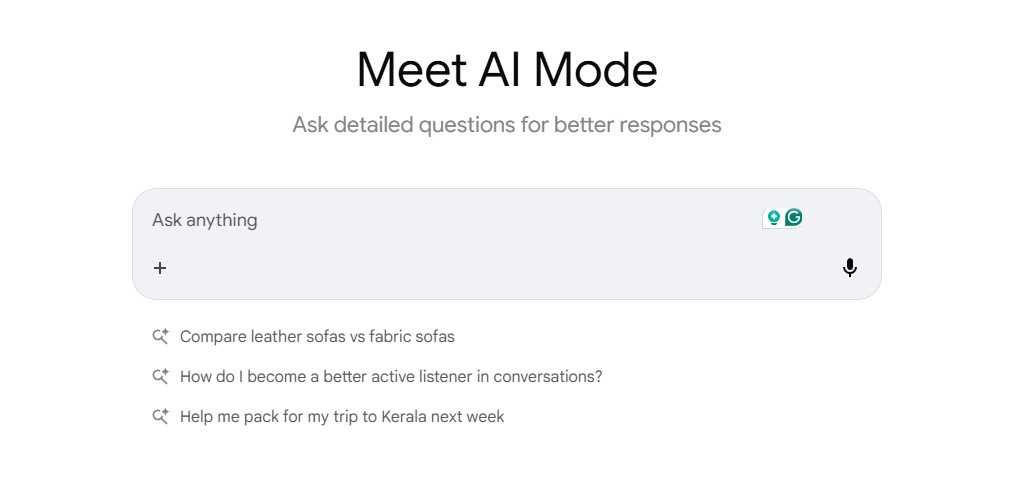
Google AI Mode is a newer addition to Google Search.
Instead of showing the usual list of links first, it highlights AI-generated answers powered by the Gemini models and Google’s Knowledge Graph.
It’s great for everyday users who want quick, simple, and conversational results. You can also look back at your previous searches and switch between regular Google Search and AI Mode whenever you want.
Best of all, it works right in your normal browser—no need to create a new account or change anything.
4. Claude AI
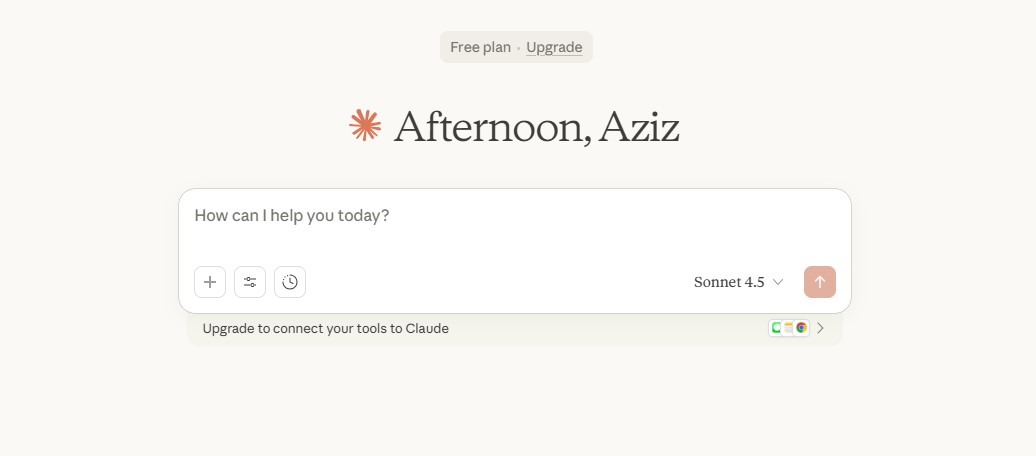
Claude AI, created by Anthropic, is built with a strong focus on safety and clarity. Instead of acting like an AI search engine that scans the live web, it works more like a helpful personal assistant. It handles long prompts well and gives clear, detailed answers.
Even though it doesn’t use real-time information, its responses still feel natural and easy to follow.
Many people use Claude AI for research, writing help, and brainstorming new ideas. It runs on advanced models and is often praised for being accurate, friendly, and easy to talk to.
You can chat with it in real time, ask follow-up questions, and keep the conversation flowing without any trouble.
5. DeepSeek

DeepSeek is an AI-powered search tool designed to help you dig deeper into complex topics. It can understand long, detailed questions and handle large documents without slowing down.
Since it uses its own AI models, it’s great for things like technical research, reviewing contracts, or getting help with code.
The tool also supports real-time chats and gives thorough, easy-to-follow answers based on a wide range of information.
One of its biggest strengths is its large context window, which lets it process more text at once than many other search engines.
6. You.com
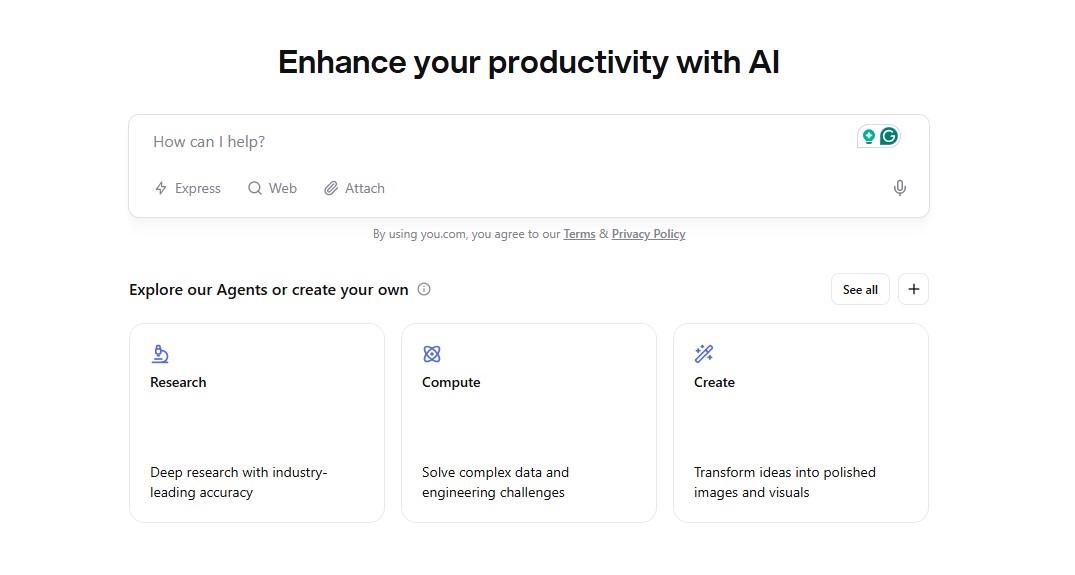
You.com is a search engine powered by AI, designed to focus on privacy, productivity, and personal customization. It works like a mix of a search tool and an AI assistant. You can use it to write emails, create code, summarize articles, or even test small scripts right in your browser.
The platform lets you pick from several AI models depending on what you need. These include GPT-5 from OpenAI, Claude from Anthropic, and You.com’s own models, which are tuned for tasks like coding or research.
You.com uses a blend of its own web index and data from other services, such as Bing and different news sources, to give you real-time information. Each time you search, a sidebar appears on the right showing sources, images, videos, and news related to what you looked up.
From our experience, You.com works best for students and professionals who want a search engine that can also help automate parts of their daily workflow.
7. Phind

Phind is an AI-powered search engine designed for developers and tech professionals. It focuses on technical questions, offering clear explanations, code examples, and direct answers.
Using advanced AI, it can understand even complex programming queries and respond in natural, easy-to-read language.
Phind pulls information from reliable sources, such as official documentation and forums, making it a trusted tool for coding and debugging.
It also supports follow-up questions and real-time conversations, making searching for solutions feel more interactive and intuitive than traditional search engines.
8. Microsoft Copilot
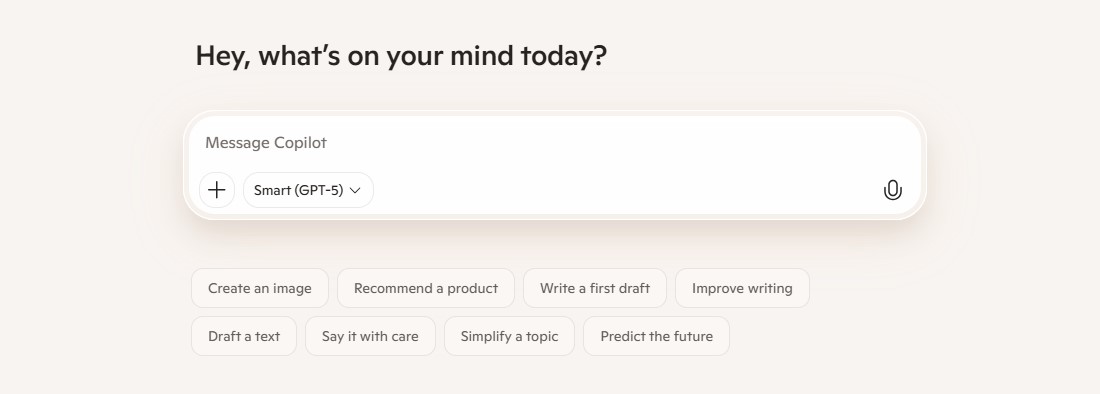
Microsoft Copilot (Bing) blends the familiar Bing search engine with smart AI tools. It shows AI-generated answers right alongside regular search results, making it useful for everything from quick browsing to detailed research.
By tapping into advanced AI models and real-time web data, Copilot can deliver up-to-date information you can rely on.
You can ask follow-up questions and get clear, easy-to-understand responses. Plus, it works seamlessly with Microsoft products like Edge and Microsoft 365, so you can use it across different devices and platforms without any hassle.
9. Komo AI

Komo is a free AI-powered search engine designed to make searching faster and easier. It gives you a smooth, ad-free experience, and the best part? You don’t need to sign up.
Komo comes with several features—Ask, Research, Search, and Explore—so you can customize how you use it.
You also have the option to pick which AI model you want to use for your searches. Choices include DeepSeek, OpenAI, Claude, Gemini, and Llama, letting you tailor results to your preferences.
10. Andi Search
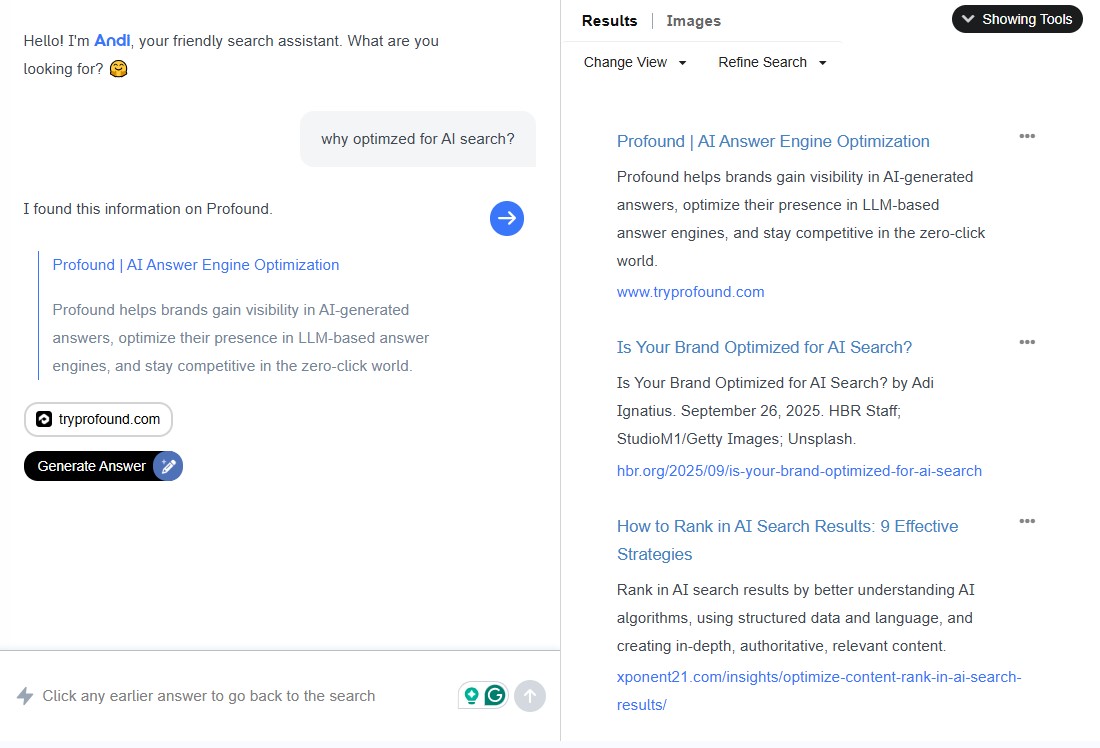
Andi Search is a blend of a chatbot and a search engine. What does that mean? You can have a conversation with Andi like you would with a chatbot, but it also pulls up information just like a search engine would.
Basically, Andi combines generative AI with live web data to answer your search queries. It summarizes information from top sources, so you get clear, concise answers without digging through multiple sites.
On top of that, Andi makes exploring information flexible. You can customize how links are displayed—whether as a feed, grid, or list—and refine your searches by diving into related topics.
Final Words
AI search engines are quickly becoming the new way to explore the web. They make it easier to get clear, direct answers without scrolling through endless results.
Each tool—whether it’s built for research, privacy, speed, or everyday questions—brings something unique to the table.
In the end, the best choice comes down to what matters most to you. No matter which one you pick, these AI-powered tools are already shaping the future of how we search and learn online.
For more, check out these other helpful resources:
- Top 11 AI Visibility Tools for LLMs Brand Monitoring
- 10 Best AI SEO Tools With Their Top Features
- 11 Best AI Content Writing Tools to Try in 2026
Lastly, follow us on Facebook and X (formerly Twitter) to stay updated on the latest WordPress and blogging-related articles.
Frequently Asked Questions
What is the difference between an AI Search Engine and a traditional search engine?A traditional search engine (e.g., classic Google) primarily provides a list of links that might contain the answer. An AI Search Engine (e.g., Google’s AI Overviews, Perplexity) uses Large Language Models (LLMs) to synthesize and generate a direct, conversational answer or summary by drawing information from multiple sources.
The key difference is the shift from a list of links to a single, summarized answer, often with citations.
A traditional search engine (e.g., classic Google) primarily provides a list of links that might contain the answer. An AI Search Engine (e.g., Google’s AI Overviews, Perplexity) uses Large Language Models (LLMs) to synthesize and generate a direct, conversational answer or summary by drawing information from multiple sources.
The key difference is the shift from a list of links to a single, summarized answer, often with citations.
Which AI search engine provides the best source citations?Perplexity AI is often cited as the leader in providing fast, trustworthy answers with the most clearly and visibly cited sources embedded directly within the answer.
Perplexity AI is often cited as the leader in providing fast, trustworthy answers with the most clearly and visibly cited sources embedded directly within the answer.
Is ChatGPT an AI search engine?No, ChatGPT is not an AI search engine. While you can use it to get answers to questions, similar to a search engine, it’s an AI chatbot that uses NLP to talk to humans and generate different types of content.
No, ChatGPT is not an AI search engine. While you can use it to get answers to questions, similar to a search engine, it’s an AI chatbot that uses NLP to talk to humans and generate different types of content.
Is there a free AI search engine?Yes, Perplexity AI, Microsoft Copilot, and others offer free versions for public web searches.
Yes, Perplexity AI, Microsoft Copilot, and others offer free versions for public web searches.
Do AI search engines provide real-time data?Yes. AI engines like Gemini and Perplexity use information from the internet in real-time and can display up-to-date and accurate answers.
Yes. AI engines like Gemini and Perplexity use information from the internet in real-time and can display up-to-date and accurate answers.
Are AI search engines free?Yes, there are plenty of free AI search engines, like Andi, Microsoft Copilot, Phind, Komo, Perplexity, etc. However, some have premium subscriptions for additional features.
Yes, there are plenty of free AI search engines, like Andi, Microsoft Copilot, Phind, Komo, Perplexity, etc. However, some have premium subscriptions for additional features.
Which is the best AI search engine?There is no single “best” AI search engine, as the ideal choice depends on your needs. Perplexity AI is frequently cited as a top choice for research due to its conversational interface and citation-backed answers. Microsoft Copilot (integrated with Bing) is a strong contender for general use, leveraging advanced AI models. For users prioritizing privacy, You.com offers a good alternative with an ad-free experience.
There is no single “best” AI search engine, as the ideal choice depends on your needs. Perplexity AI is frequently cited as a top choice for research due to its conversational interface and citation-backed answers. Microsoft Copilot (integrated with Bing) is a strong contender for general use, leveraging advanced AI models. For users prioritizing privacy, You.com offers a good alternative with an ad-free experience.
